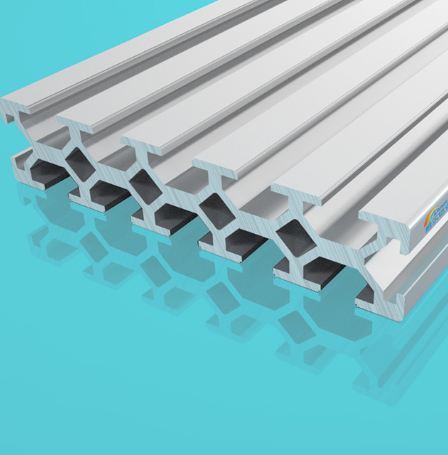
Aluminum extrusion profile types describe the different shapes and structures formed when aluminum is pushed through a die. You see these profiles everywhere in manufacturing and engineering because each type serves a unique purpose. The modular design lets you customize layouts quickly and adapt to new requirements. This flexibility helps you build efficient workspaces, adjust systems without tools, and improve productivity. Choosing the right profile boosts safety, reduces waste, and increases your project’s success rate.
What Are Aluminum Extrusion Profiles?
Aluminum extrusion profiles are shapes made by forcing aluminum alloy through a die. You see these profiles in many industries because they are lightweight, strong, and easy to customize. The aluminum extrusion process shapes aluminum into specific cross-sectional profiles. Designers and engineers use these profiles for building frames, machine parts, and architectural features. Aluminum’s physical properties make it a reliable choice for both simple and complex shapes.
Aluminum Extrusion Process Overview
You can understand the extrusion process by looking at its main steps:
Prepare the extrusion die for even metal flow.
Preheat the aluminum billet to make it malleable.
Transfer the billet to the extrusion press and add lubricant.
Push the billet into the press container.
Press the material against the die to shape it.
Quench the extrusions as they exit the press.
Shear the extrusions to table length.
Cool the extrusions to room temperature.
Stretch the extrusions to correct alignment.
Cut the extrusions to final length.
Apply heat treatment and surface finishing.
This process creates profiles with consistent shapes and properties. You can choose different alloys and finishes to match your project needs.
Key Features of Aluminum Extrusion Profiles
Aluminum extrusion profiles stand out from other metal profiles. You get several advantages when you use them:
Feature | Aluminum Profile | Metal Profile (Steel) |
Density | Lightweight (2.7g/cm³) | Heavy (7.85g/cm³) |
Corrosion Resistance | Excellent (natural oxide film) | Poor (easy to rust) |
Strength | Moderate (improved by alloying) | High (especially structural steel) |
Thermal Conductivity | High (good for heat sinks) | Low (inferior to aluminum) |
Processability | Excellent (easy to extrude) | Good (higher processing difficulty) |
Cost | Moderate | Low to high (varies by type) |
You can use aluminum extrusion profiles in construction, industry, automotive, aerospace, furniture, and renewable energy. Hunan Langle Technology Co., Ltd. offers a wide range of profiles, including T-slot and V-slot types. You can select standard or custom profiles to fit your project.
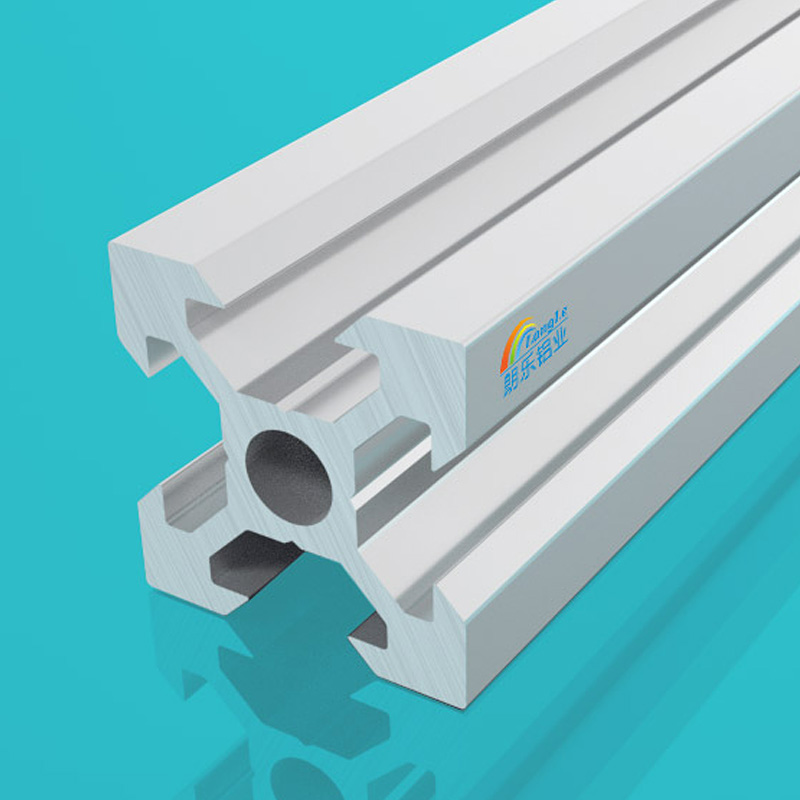
Types of Aluminum Extrusion Profiles
You encounter many types of aluminum extrusion profiles in industry. Each profile shape serves a unique purpose. You can select standard aluminum extrusion profiles or custom aluminum extrusions to match your project needs. Let’s explore the main types of aluminum extrusion profile types and see how they fit different applications.
Solid Aluminum Extrusion Profiles
Solid aluminum extrusion profiles have no internal voids. You see these profiles in many structural applications. They offer high strength and simple processing. You can use them for direct load-bearing parts.
Feature | Description |
Defined Cross-Section | Profiles have a specific shape that can be standardized or customized. |
Lightweight and High Strength | Aluminum’s low density makes it lighter than steel, while alloying enhances its strength. |
Corrosion Resistance | A natural oxide layer protects against corrosion, suitable for outdoor use. |
Excellent Machinability | Easy to extrude, cut, weld, and machine, allowing for complex designs. |
Environmental Sustainability | 100% recyclable, requiring less energy to recycle compared to primary production. |
Low Maintenance Cost | Resistant to rust and deformation, with a long service life. |
Functional Physical Properties | Good thermal and electrical conductivity, ideal for electronics and heat dissipation. |
You find solid profiles in curtain walls, doors, windows, and high-rise building frames. You also see them in aircraft and automotive components, heat sinks, solar panel mounts, machine frames, and furniture. Langle offers solid aluminum extrusion profiles like the 2020B and 2040 series. These profiles provide reliable support for light and medium-duty workstations.
Hollow Aluminum Extrusion Profiles
Hollow aluminum extrusion profiles contain one or more enclosed voids. You benefit from reduced weight and excellent resistance to bending and torsion. These profiles are ideal for structural frames and beams.
Reduces weight significantly compared to solid profiles
Superior bending and torsional rigidity
More stable under load due to even stress distribution
Ideal for applications where weight savings are critical
Feature | Hollow Profiles | Solid Profiles |
Weight | Significantly lighter due to the void in the center | Heavier as they are fully solid |
Stiffness-to-Weight Ratio | Higher, providing better structural efficiency | Lower, straightforward strength |
Resistance to Bending & Torsion | Superior, resists sagging and twisting effectively | Less effective under bending forces |
Applications | Ideal for beams, columns, and structural frames | Suitable for direct load applications |
You see hollow profiles in bicycle frames, boat frames, conveyor systems, and industrial enclosures. Langle’s hollow T-slot and V-slot profiles, such as the 4080EV and 2080 series, offer high strength-to-weight ratio and versatile design options.
Semi-Hollow Aluminum Extrusion Profiles
Semi-hollow aluminum extrusion profiles feature partially enclosed voids. You gain a balance between strength and lightweight properties. These profiles work well in precision engineering contexts.
Advantage | Description |
Lightweight yet strong | Components are both lightweight and strong, ideal for structural applications. |
Seamless profiles | The extrusion process produces seamless hollow profiles, enhancing structural integrity. |
Precision and consistency | Advanced manufacturing ensures tight tolerances and minimal deviation. |
You use semi-hollow profiles in 3D printing equipment frames, precision testing instrument brackets, and other high-accuracy projects. Langle provides customizable profiles for these specialized needs.
T-Slot Aluminum Extrusion Profiles
T-slot aluminum extrusion profiles have a groove-based modular design. You assemble structures quickly without welding or specialized tools. You can modify the size, height, or shape to fit your project.
Easy assembly and customization
Highly modular and flexible
Suitable for workstations and automation systems
Assembly requires only simple hand tools
Strong and durable for various applications
Cost-effective with a good balance between quality and price
Components attach anywhere along the profile length
You find T-slot aluminum extrusion profiles in automation systems, robotics, machinery bases, and display racks. Langle’s T-slot profiles, such as the 2020, 2040, and 4040 series, offer modular compatibility and efficient assembly.
V-Slot Aluminum Extrusion Profiles
V-slot aluminum extrusion profiles feature a V-shaped groove. You use these profiles for precise linear motion control. They provide exceptional rigidity and stability.
Feature | T-slot Profiles | V-slot Profiles |
Design | T-shaped slot for easy attachment | V-shaped groove for linear motion control |
Versatility | Highly versatile for various applications | Specialized for precise applications like 3D printing |
Assembly | Quick and flexible assembly adjustments | Requires meticulous positioning during assembly |
Applications | Automation systems, robotics, machinery bases | 3D printers, CNC machines, camera sliders |
Stability | Good for general use | Exceptional rigidity and stability |
Customization | Easy modifications and adjustments | More complex customization processes |
You use V-slot profiles in 3D printers, CNC machines, and camera sliders. Langle’s V Slot Aluminium Profile series, including LE-6-2020V and LE-6-4080EV, integrates structural framing and linear motion. You benefit from modular compatibility and precision-ready design.
Tip: Choose V-slot profiles when you need smooth linear motion and high accuracy. Select T-slot profiles for flexible modular assembly.
Custom Aluminum Extrusion Profiles
Custom aluminum extrusions allow you to create unique shapes for specialized projects. You follow a process that includes design, die creation, billet preparation, extrusion, stretching, cutting, and surface finishing.
Design and Engineering: CAD designs match your specific needs.
Die Creation: Steel dies ensure precision.
Billet Preparation: High-quality aluminum billets are selected.
Extrusion Process: Heated billets are pressed through dies to form profiles.
Stretching: Profiles are stretched to relieve stresses.
Cutting: Profiles are cut to required lengths.
Surface Finishing: Anodizing and coatings enhance durability and aesthetics.
You gain versatility in design, high strength-to-weight ratio, corrosion resistance, material efficiency, heat dissipation, recyclability, and customizable aesthetics. Langle offers custom profile designs and OEM/ODM services for unique industrial scenarios.
Note: Customizable profiles help you optimize performance and reduce waste in specialized applications.
You see that the types of aluminum extrusion profiles cover a wide range of shapes and functions. You can select standard aluminum extrusion profiles or custom aluminum extrusions to match your project requirements. Langle’s product line includes solid, hollow, semi-hollow, T-slot, V-slot, and custom profile shapes, giving you versatile design options for every application.
Applications of Aluminum Extrusion Profiles
Industrial and Automation Uses
You see aluminum extrusion profiles everywhere in modern factories and automated systems. These profiles help you build strong, lightweight frameworks that support machines and equipment. You can quickly assemble or reconfigure workstations, conveyor systems, and storage racks using modular T-slot or V-slot profiles from Langle. This flexibility lets you adapt to changing production needs without major downtime.
Production line aluminum profiles
Machines aluminum profiles
Industrial modular frameworks
Workbench profiles for assembly stations
Shelves profiles and storage systems
Aluminum extrusion profiles give you structural rigidity while keeping weight low. You can integrate motors, sensors, and other automation components with ease. This design makes maintenance and upgrades simple, which is essential for fast-paced manufacturing environments.
Architectural and Structural Uses
Aluminum extrusion profiles play a key role in building construction and architectural design. You use these profiles for frameworks, facades, and support systems because they combine strength with low weight. The table below shows how different applications demand specific performance features:
Application Area | Performance Requirement |
Building frameworks | Dependable load-bearing performance and long-term structural stability |
Facade substructures | Mechanical strength and precise dimensional accuracy |
Support systems for curtain walls | High strength-to-weight ratios |
Canopies and skylights | Enhanced stability and deformation resistance |
Shading systems | Robust mechanical properties for continuous use |
Load-bearing architectural components | Advanced surface treatments for corrosion resistance and durability |
You can select T-slot or V-slot profiles from Langle for these uses. Their advanced surface finishes and precise tolerances help you meet strict building codes and ensure long-lasting performance.
Consumer and Custom Applications
You find aluminum extrusion profiles in many consumer products, from electronics to vehicles. The evolution of aluminum extrusion technology lets you customize the length, shape, and finish of each profile. This flexibility helps you create products that stand out in a crowded market.
You see these profiles in construction tools, automotive parts, aerospace components, and consumer electronics. The demand for lightweight, durable materials continues to grow as industries focus on sustainability and energy efficiency. New design tools and advanced alloys allow you to create complex, custom profiles that match your exact needs. This trend gives you more creative freedom and helps you deliver unique solutions for your customers.
Aluminum Extrusion Profile Specs and Selection
Material Grades and Alloys
You need to choose the right alloy for your project. Different alloys offer unique properties and suit various types of profiles and applications. Langle provides options like 6063-T5/T6 and 6061, which are popular for their strength and extrudability. The table below shows common alloys and their uses:
Alloy | Key Properties | Common Applications |
6061 | Good machinability, weldability, high strength | Structural applications, load-bearing parts |
6063 | Excellent extrudability, anodizing response | Architectural features, aesthetic trims |
5000 series | High corrosion resistance, magnesium content | Marine environments |
7000 series | High strength, lower corrosion resistance | Aerospace, high-stress applications |
You can request custom alloys for special environments. Langle’s customization service helps you match the material to your project needs.
Dimensions and Tolerances
You must consider the size and precision of your profiles. Standard slot sizes include 6mm, 8mm, and 10mm. Langle offers profiles in lengths from 50 mm to 6000 mm. The tolerances depend on the profile size:
Section size / wall thickness | Typical tolerance (width/height) | Typical wall thickness tolerance |
Small profiles (≤ 20 mm width) | ±0.1 to ±0.2 mm | ±0.05 to ±0.1 mm |
Medium profiles (20–50 mm) | ±0.2 to ±0.3 mm | ±0.1 to ±0.15 mm |
Large profiles (> 50 mm) | ±0.3 to ±0.5 mm | ±0.15 to ±0.25 mm |
Industry standards like ANSI H35.2 and ASD ensure these tolerances are practical for industrial use.
Surface Finishes and Treatments
You can select from several finishes to improve durability and appearance. Common treatments include:
Anodizing: Adds corrosion and wear resistance.
Powder coating: Provides a tough, colorful finish.
Liquid paint: Offers uniform coverage.
Anodizing increases durability and protects against scratches and UV damage. Powder coating gives you a wide color palette and strong resistance to chemicals.
Finish Type | Best Use Environment | Key Pros | Considerations |
Anodizing | Exterior, wet areas | Superior resistance | Limited colors, harder to repair |
Powder Coating | Interior, decorative | Many colors, lower cost | May chip or fade over time |
Specialty | Coastal, solar frames | High durability | Higher cost, longer lead time |
Tests show anodized profiles last 10-15 years in tough conditions. Powder coating lasts 5-10 years.
How to Choose the Right Aluminum Extrusion Profile
You should match the profile to your project’s load and environment. Consider these factors:
Strength and hardness for structural needs
Corrosion resistance for outdoor or marine use
Weldability and machinability for assembly
Finishing options for aesthetics and function
End-use and industry requirements
Tip: For heavy loads, select larger profiles and strong alloys. For harsh environments, choose corrosion-resistant finishes.
You can use Langle’s catalog and customization services to find the best fit. Look for technical support and fast delivery to keep your project on track.

Benefits and Limitations of Aluminum Extrusion Profile Types
Advantages of Each Profile Type
You gain unique benefits from each profile type. Solid profiles give you high strength and simple processing. Hollow profiles reduce weight and offer excellent rigidity. Semi-hollow profiles balance strength and lightness. T-slot profiles let you build modular structures quickly. V-slot profiles provide smooth linear motion for precision equipment
Here is a table showing the main benefits of using aluminum extrusion profiles compared to other materials:
Benefit | Description |
Lightweight | Easy to handle, reduces structural loads. |
Durability | Highly resistant to corrosion, lasts in harsh environments. |
Design Flexibility | Allows custom profiles and complex shapes. |
Fire Safety Compliance | Meets strict fire safety and building code requirements. |
Easy Installation | Simplifies installation, repair, and recycling. |
You also enjoy these advantages:
One-third the weight of steel, saving you effort and cost.
High strength-to-weight ratio, keeping your structures safe.
Non-toxic and non-combustible, suitable for many applications.
100% recyclable, supporting sustainability.
Langle’s profiles stand out with modular compatibility, tool-free assembly, and over 500 compatible components. You can customize your design and rely on ISO 9001 quality control for precision and reliability.
Potential Drawbacks and Considerations
You should consider some limitations when choosing between types. Each alloy has unique properties that affect strength, surface finish, and cost. Improper handling can cause scratches or dents. Regular inspections help you catch defects and maintain structural integrity.
Drawback Type | Description |
Alloy Selection | Properties affect extrudability, strength, finish, and cost. |
Handling and Storage | Scratches, dents, and warping can compromise quality. |
Inspection Processes | Regular checks ensure structural integrity and catch defects early. |
You need to match the profile type to your project’s requirements. For heavy loads, solid or large hollow profiles work best. For modular assembly, T-slot profiles offer flexibility. For precision motion, V-slot profiles are ideal. Langle’s end-to-end control and corrosion protection ensure your profiles perform well in various environments.
Tip: Always check the compatibility of connectors and fasteners before assembly. Proper handling and storage protect your profiles from damage.
You can see that each profile type fits a specific role. The table below highlights their best uses:
Profile Type | Best-Fit Applications |
Flat Bars | Structural support in many designs |
Tubes | Frameworks and protective structures |
Custom Extrusions | Projects needing exact specifications |
Matching the right profile to your project improves performance and reduces waste. For expert advice and custom solutions, reach out to manufacturers like Langle. Explore more resources or connect with specialists to guide your next design.
FAQ
What is the difference between T-slot and V-slot aluminum profiles?
T-slot profiles let you build modular frames quickly. V-slot profiles add a V-shaped groove for smooth linear motion. You use T-slot for flexible assembly. You choose V-slot when you need both structure and precise movement.
Can I cut and assemble aluminum extrusion profiles myself?
Yes, you can cut profiles with basic tools like a hacksaw or miter saw. You assemble them using connectors and brackets. You do not need welding or special skills.
How do I select the right aluminum alloy for my project?
You match the alloy to your needs. 6063 works well for architectural and modular frames. 6061 suits heavy-duty or load-bearing structures. You can ask Langle for help with special requirements.
Are aluminum extrusion profiles suitable for outdoor use?
Yes, you can use them outdoors. Anodized or powder-coated finishes protect against corrosion and weather. You should choose the right surface treatment for your environment.
What accessories work with T-slot and V-slot profiles?
You can use brackets, fasteners, hinges, and panels. V-slot profiles also support V-wheels for linear motion. Langle offers a wide range of compatible accessories for both types.