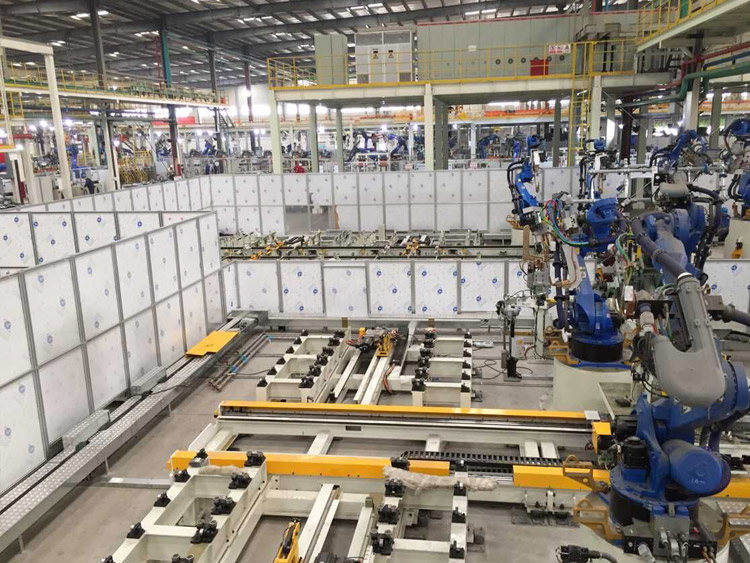
Machine guarding goes beyond simply erecting a physical barrier. It serves as a critical operational asset for any active manufacturing facility. Choosing the wrong material for a production line risks OSHA compliance liabilities, unexpected bottlenecks during equipment maintenance, and premature wear. Facility managers and safety engineers know this debate transcends generic aesthetics. It requires aligning specific material properties with actual floor hazards. You must evaluate everything from heavy forklift traffic to highly precise robotic cells.
This guide breaks down the structural, economic, and compliance realities of both materials. We will help you specify the right Industrial Fence to ensure your plant's operational continuity. You will learn exactly when to deploy heavy-duty steel and when to leverage lightweight aluminum extrusions for maximum efficiency and safety.
Key Takeaways
Impact Tolerance: Steel excels in high-traffic zones, absorbing brute-force collisions from material handling equipment (MHE) without catastrophic failure.
Proximity & Modularity: An aluminum safety fence allows for tighter mesh configurations (e.g., 1/2-inch grids), enabling legally compliant guarding closer to the actual hazard.
Installation Dynamics: Steel often arrives in pre-assembled, heavier panels requiring machinery to install; aluminum’s lightweight profile drastically reduces manual labor and shipping costs.
Lifecycle Trade-Offs: Steel often provides a lower initial material cost, while aluminum can reduce maintenance demands and simplify future reconfiguration.
Defining the Core Demands of an Industrial Fence on the Production Floor
Plant environments subject perimeter barriers to immense daily stress. You cannot treat all safety perimeters identically. A proper risk assessment requires separating minor operational nuisances from life-threatening hazards.
Threat-Specific Performance
You must differentiate between pedestrian deterrence and brute-force defense. Pedestrian deterrence simply keeps human hands away from moving parts. It serves as a visual and mild physical boundary. Brute-force defense stops a speeding forklift from crushing a vital control panel or striking an employee. Planners must assess the kinetic energy potential of the immediate area. Light pedestrian zones demand vastly different materials than busy shipping aisles.
The Guarding as a Platform
Modern safety perimeters rarely act as standalone barriers. They function as robust structural platforms. Facility upgrades often require mounting heavy hardware directly to the barrier. Examples include:
Automated access control systems and biometric scanners.
Heavy safety interlocks and electronic deadbolts.
Light curtains and continuous CCTV monitoring cameras.
If you choose a weak material, these heavy add-ons will cause the perimeter to sag over time. Sagging misaligns optical sensors and prevents automated doors from latching correctly. Your chosen material must bear this sustained static load without compromising its structural integrity.
Environmental Realities
Evaluate the specific micro-climate inside your facility. Every manufacturing plant possesses unique environmental stressors. You must consider ambient moisture, frequent temperature shifts, and localized vibration. Pay special attention to chemical washdown protocols. Food processing plants and pharmaceutical lines use harsh caustics daily. These cleaning agents quickly degrade the wrong metal. Additionally, constant vibration from stamping presses can rattle weak joints loose over time.
The Case for Steel Guarding: High-Impact and Load-Bearing Zones
Heavy manufacturing demands unforgiving structural boundaries. Steel guarding dominates these extreme environments. It offers unmatched physical permanence and high kinetic energy absorption.
Engineered Resilience
Welded steel frameworks handle heavy impacts exceptionally well. When a 5,000-pound forklift backs into a perimeter, the barrier must absorb the shock. Lighter metals often crease permanently or shatter under immense force. Steel yields differently. It flexes and dents, absorbing the kinetic energy. Maintenance teams can often physically straighten a dented steel panel. This resilience directly reduces the frequency of full panel replacements. You gain a highly durable barrier capable of surviving brutal manufacturing environments.
Superior Load-Bearing Capacity
Steel provides unparalleled rigidity. This makes it the ideal foundation for mounting heavy industrial equipment. When you attach a vibrating conveyor belt or a heavy automated sliding door, you need absolute stability. Steel posts will not buckle or warp under these immense loads. High-security environments often integrate heavy electronic locks. Steel perimeters support these components effortlessly. The rigid frame ensures sensitive safety interlocks remain perfectly aligned year after year.
Installation & Integration
Deploying heavy steel introduces unique logistical challenges, but it also offers distinct installation advantages. Manufacturers often ship steel panels pre-assembled and pre-wired from the factory.
Contractors unload the pre-welded sections using standard material handling equipment.
Installers drop the large panels securely into place across open factory floors.
Technicians quickly connect the pre-wired channels directly to central control panels.
This factory-level preparation accelerates installation in large, unobstructed warehouse spaces. It reduces the time skilled electricians spend wiring complex access gates on the floor.
Best Practices for Steel Guarding
Always secure steel base plates to reinforced concrete using heavy-duty wedge anchors.
Specify high-visibility yellow powder coating to increase driver awareness in forklift aisles.
Touch up deep scratches immediately to prevent localized surface rust from taking hold.
The Case for the Aluminum Safety Fence: Precision, Modularity, and Proximity
Modern production lines frequently prioritize flexibility over sheer brute strength. High-tech assembly cells require barriers capable of adapting quickly. An Aluminum Safety Fence delivers exact dimensional precision, making it indispensable for modern lean manufacturing.
Close-Proximity Compliance
Regulatory standards dictate exactly how far a barrier must sit from a hazardous pinch point. These distances depend entirely on the barrier's mesh size. Aluminum extruded profiles easily accommodate extremely tight mesh options. You can seamlessly integrate 1/2-inch wire grids or clear polycarbonate panels into the frame. This tight grid satisfies strict OSHA and ISO machine safety standards. It allows you to legally position the guarding much closer to the moving parts. Consequently, you reclaim valuable floor space around compact robotic work cells.
Rapid Reconfiguration
Production lines constantly evolve to meet changing consumer demands. Equipment retooling requires adaptable infrastructure. Aluminum provides unmatched modularity through its simple bolt-together design. Maintenance teams can easily unbolt, custom-cut, and modify enclosures directly on the factory floor.
This rapid reconfiguration offers massive operational advantages:
Teams require no specialized welding equipment to alter the perimeter.
Facilities bypass the lengthy approval process for hazardous hot-work permits.
Production experiences significantly less downtime during line changeovers.
Native Corrosion Resistance
Aluminum holds a distinct chemical advantage over traditional alloys. When exposed to the atmosphere, it instantly generates a microscopic, naturally occurring oxide layer. This layer seals the metal against further degradation. It makes aluminum the undisputed choice for specific harsh environments. Clean rooms, highly humid facilities, and automated car washes rely on this property. Furthermore, production lines subjected to daily chemical washdowns benefit immensely. Aluminum withstands prolonged moisture exposure without rusting or peeling.
Common Mistakes to Avoid
Never install lightweight aluminum barriers directly next to high-speed forklift traffic lanes.
Do not overload aluminum T-slots with excessively heavy automated gate motors without proper bracing.
Avoid using cheap, thin-walled extrusions; invest in industrial-grade structural aluminum profiles.
Installation, Maintenance, and Scalability
Procurement departments often focus exclusively on the initial price per linear foot. This narrow view ignores the broader operating realities of the asset. You must also consider installation labor, shipping logistics, maintenance demands, and future reconfiguration needs.
Upfront Costs vs. Deployment Labor
Steel traditionally boasts a lower raw material cost per foot. However, its sheer weight drives up surrounding deployment expenses. Shipping heavy steel across the country incurs massive freight fees. Once the steel arrives, you must deploy heavy machinery and multi-person teams to position the panels safely.
Aluminum presents a different equation. The material often costs more upfront due to complex extrusion processes. Yet, its lightweight profile drastically lowers domestic freight costs. A single technician can easily carry and bolt together large aluminum sections. This drastically reduces the hourly labor required for initial deployment.
Repair vs. Replace Considerations
Maintenance realities heavily influence long-term performance. Steel requires periodic visual inspections for scratches. Deep gouges expose bare metal, leading to rust. Maintenance teams must routinely sand and touch up powder coatings to prevent structural decay.
Damaged aluminum components present a different scenario. Aluminum does not rust when scratched. However, if a severe impact bends an aluminum extrusion, you usually cannot bend it back safely. You must completely replace the damaged section. Fortunately, the modular T-slot design makes swapping a single beam incredibly fast and simple.
Lifecycle Value
Industrial components eventually reach the end of their useful lifespan. Facility upgrades often render old barriers obsolete. Aluminum retains strong recycling value because it is 100% recyclable without losing its inherent material properties. This can make it especially attractive for facilities that expect frequent future upgrades or layout changes.
Comparison Matrix
Cost Factor | Steel Guarding | Aluminum Safety Fence |
|---|
Initial Material Cost | Generally lower per linear foot. | Higher due to extrusion processing. |
Freight & Shipping | High; heavy weight demands specialty transport. | Low; lightweight profiles stack easily. |
Installation Labor | High; requires machinery and large crews. | Low; easily assembled by minimal personnel. |
Ongoing Maintenance | Moderate; requires periodic rust prevention. | Low; natural oxide layer prevents corrosion. |
End-of-Life Material Recovery | Low to Moderate. | Strong due to full recyclability. |
The Verdict: Implementing a Zone-by-Zone Guarding Strategy
Modern factories rarely benefit from a single material choice. Adopting a strict "one-size-fits-all" mentality creates massive inefficiencies. You risk overspending on heavy materials for low-risk zones or compromising safety with weak materials in high-risk traffic aisles.
Avoid the "One-Size-Fits-All" Trap
We highly recommend a hybrid facility approach based on distinct risk zones. Walk your floor and map the kinetic hazards. Identify where vehicles operate and where precise human-machine interaction occurs. You can effectively merge both systems to optimize your budget and safety compliance simultaneously.
When to Specify Steel
Designate heavy steel for your most critical macro-level perimeters. Use it where brute force represents the primary threat. Key application zones include:
Main Forklift Aisles: Protect expensive machinery from accidental vehicular collisions.
Robotic Arm Containment: Contain heavy industrial robots that could throw heavy parts if a malfunction occurs.
Heavy Access Zones: Support massive sliding doors that require rigid, unyielding tracks.
When to Specify Aluminum
Designate aluminum for sophisticated micro-level machine guarding. Use it where precision, cleanliness, and adaptability matter most. Key application zones include:
Complex or Tight Spaces: Enclose compact automated cells where floor space remains at a premium.
Clean Manufacturing: Guard food processing, pharmaceutical, and electronic assembly lines subjected to washdowns.
Dynamic Production Lines: Protect testing areas and assembly zones where engineers expect frequent retooling.
Conclusion
The choice between an aluminum barrier and a heavy steel perimeter ultimately comes down to environmental context. Steel provides necessary brute-force protection against forklifts and offers superior load-bearing capacity for heavy gates. Meanwhile, aluminum delivers incredible modularity, eliminates hot-work permits, and naturally resists corrosion in harsh washdown environments.
Facility managers must prioritize their actual floor conditions over simple aesthetic preferences. We encourage you to audit your specific machine zones today. Review your latest safety risk assessments and track the historical impact data for your aisles. Finally, request a comprehensive material evaluation from a certified safety integrator to ensure your chosen barrier protects your most valuable assets efficiently.
FAQ
Q: Will an aluminum safety fence hold up to forklift impacts?
A: No. Aluminum is designed for pedestrian deterrence and close-proximity machine guarding. It will deform or break under heavy vehicular collisions. High-traffic forklift zones require heavy-duty steel barriers specifically engineered to absorb massive kinetic impacts without catastrophic failure.
Q: Is steel guarding always prone to rust in manufacturing facilities?
A: Not if properly treated. Modern industrial steel guarding utilizes hot-dipped galvanization and high-grade powder coating to aggressively prevent corrosion. However, if deep scratches expose the bare metal, localized rust can form. Aluminum remains superior for direct, daily chemical washdown environments.
Q: Which material is faster to install for a temporary production line?
A: Aluminum is generally much faster for on-the-fly custom builds. Its lightweight nature and extrusion-based, bolt-together assembly allow for rapid deployment. Maintenance teams can execute quick, on-site modifications directly on the floor without requiring welding equipment, hot-work permits, or heavy lifting machinery.