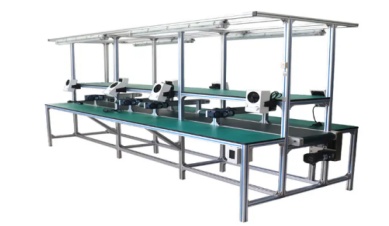
In modern manufacturing environments, efficiency, ergonomics, and adaptability are the keys to maintaining competitiveness. Among the many elements that contribute to a well-optimized workspace, the aluminium workbench stands out as a silent but vital player. Whether in electronics assembly, automotive production, or precision engineering, aluminium workbenches form the backbone of smooth, efficient, and sustainable workflows.
1. The Growing Importance of Aluminium Workbenches in Modern Manufacturing
As manufacturing systems become increasingly automated and customized, workspace infrastructure must keep pace. Traditional steel or wooden benches often struggle to meet the demands of fast-paced, modular, and lean production systems. Aluminium workbenches, constructed primarily from high-strength aluminium profiles, offer a lightweight yet incredibly durable alternative.
Their modular structure, corrosion resistance, and compatibility with accessories make them ideal for industrial environments requiring frequent reconfiguration or ergonomic optimization. From electronics to automotive components, aluminium benches help factories streamline operations, reduce setup times, and improve worker comfort—all while maintaining long-term reliability.
2. Key Benefits of Aluminium Workbenches in Assembly Line Efficiency
Aluminium workbenches have become a cornerstone of modern industrial design due to their combination of strength, flexibility, and adaptability. When incorporated into assembly lines, they not only enhance workflow but also contribute to higher productivity, reduced maintenance, and improved worker well-being. Below are the primary advantages that make aluminium workbenches indispensable in today’s manufacturing and automation environments.
Lightweight yet Robust Construction
One of aluminium’s most compelling features is its exceptional strength-to-weight ratio. While it weighs only about one-third of steel, aluminium maintains impressive structural stability and load-bearing capacity. This means that even large-scale workbenches can support heavy tools, components, or assemblies without compromising mobility.
The reduced weight simplifies logistics within factories—workbenches can be transported, lifted, or repositioned easily by a small team, without the need for forklifts or cranes. This agility is especially beneficial for facilities that frequently change their production layout or employ flexible manufacturing systems.
Modular Design for Customization and Scalability
Every assembly line evolves—whether through product diversification, volume expansion, or the adoption of new automation technologies. Aluminium workbenches are inherently modular, meaning they can be easily customized and expanded without welding or heavy modification.
Using T-slot extrusions, workers can quickly attach or detach accessories such as shelves, lighting systems, monitor mounts, or pneumatic tools. This flexibility supports Lean Manufacturing principles by enabling a workspace to adapt swiftly to new processes while minimizing downtime.
For instance, when transitioning from manual to semi-automated production, an aluminium bench can integrate robotic mounts, conveyors, or data terminals simply by adding compatible fittings. Instead of replacing furniture, manufacturers only adjust components—a cost-effective and sustainable approach.
Enhanced Ergonomics and Worker Comfort
Human-centered design is increasingly prioritized in industrial engineering, and aluminium workbenches play a vital role in this shift. Many designs feature height-adjustable mechanisms, allowing operators to alternate between sitting and standing postures throughout their shifts.
Ergonomic accessories—like monitor arms, anti-fatigue mats, and adjustable footrests—can be seamlessly mounted via T-slot channels. This adaptability ensures each workstation can be personalized to fit the operator’s height, task type, and working habits.
The ergonomic benefits extend beyond comfort. Studies have shown that properly designed workstations can increase productivity by 20–25%, reduce physical strain, and lower absenteeism linked to repetitive stress injuries. By keeping workers physically comfortable and mentally engaged, aluminium workbenches help sustain consistent output quality and reduce long-term health costs for employers.
Easy Integration with Automation and Conveyors
Modern factories increasingly rely on Industry 4.0 technologies—including robotics, data analytics, and smart sensors—to optimize production. Aluminium workbenches align perfectly with this evolution due to their structural flexibility and compatibility with automation systems.
Their extruded profiles can house electrical wiring, air tubing, or sensor cables internally, keeping the workspace clutter-free. Furthermore, aluminium frames allow for easy attachment of robotic arms, actuators, and conveyor connectors, transforming a simple workstation into an intelligent assembly cell.
This integration streamlines material flow and reduces manual handling errors. For example, in an electronic component assembly line, automated feeders can be connected directly to aluminium benches, allowing seamless part delivery and retrieval. In more advanced setups, data sensors embedded within the workbench can transmit performance metrics in real time, supporting predictive maintenance and continuous improvement efforts.
Corrosion Resistance and Cleanroom Compatibility
Unlike traditional steel workbenches that require painting, powder coating, or regular upkeep, aluminium naturally forms a protective oxide layer that prevents corrosion. This makes it especially suitable for demanding environments such as cleanrooms, laboratories, and food or pharmaceutical production lines, where hygiene and contamination control are crucial.
The smooth, non-porous surface of aluminium is easy to clean and sterilize, resisting accumulation of dust, grease, and chemical residues. In facilities handling sensitive electronics or sterile materials, aluminium benches ensure that the workspace remains compliant with ISO and GMP standards.
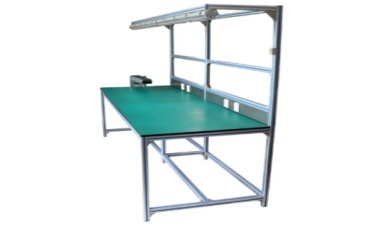
3. Enhancing Assembly Line Efficiency Through Intelligent Design
Streamlined Workflow Organization
Aluminium workbenches are designed to support lean manufacturing principles by optimizing tool placement and material flow. Modular accessories like tool holders, bins, and drawer units can be mounted within reach, reducing unnecessary movement.
This minimizes idle time and motion waste—two of the “Seven Wastes” identified in lean production theory. The result is a more organized, efficient workspace where workers can focus on value-added tasks.
Visual Management and 5S Implementation
A well-organized workbench enhances visual control. Aluminium benches can incorporate labeling panels, color-coded zones, or shadow boards to facilitate the 5S methodology—Sort, Set in order, Shine, Standardize, and Sustain.
These features make it easier for workers to identify missing tools, maintain cleanliness, and standardize procedures across multiple shifts or workstations. As a result, quality and consistency improve while reducing time spent on searching or setup.
Quick Reconfiguration for Production Flexibility
In dynamic manufacturing sectors, adaptability is key. With aluminium profiles, workbenches can be reconfigured or expanded without specialized tools or welding. By using T-slot connectors and modular joints, operators can rearrange workstations in minutes rather than hours.
This flexibility supports Just-in-Time (JIT) production strategies and short production runs, enabling manufacturers to respond rapidly to changing customer demands or product designs.
4. Environmental and Economic Advantages
Sustainability Through Recyclability
Aluminium is one of the most sustainable industrial materials, with over 90% recyclability and minimal loss of quality after reprocessing. Choosing aluminium workbenches contributes to greener production facilities and aligns with corporate sustainability goals.
Manufacturers can further reduce their carbon footprint by selecting benches made from recycled aluminium profiles, which require only 5% of the energy needed to produce primary aluminium.
Long Service Life and Low Maintenance Costs
Thanks to their resistance to corrosion, warping, and deformation, aluminium workbenches offer exceptional longevity. Unlike wood, they don’t absorb moisture, and unlike steel, they don’t rust.
Their low maintenance requirements translate to significant cost savings over time. Even in high-humidity or chemically active environments, aluminium benches maintain structural integrity for decades, reducing total cost of ownership.
Cost Efficiency Through Modular Upgrades
Instead of replacing entire workstations, companies can upgrade or expand existing aluminium benches with modular components. This scalable approach minimizes waste, shortens downtime, and saves money on future expansions or process upgrades.
For example, a single aluminium bench can evolve from a manual assembly station to a semi-automated workstation simply by integrating sensors, pneumatic tools, or conveyor systems—all without replacing the core structure.
5. Real-World Applications of Aluminium Workbenches
Electronics and Precision Assembly
In the electronics industry, static control and cleanliness are critical. Aluminium benches can be equipped with ESD (electrostatic discharge) surfaces, grounding straps, and anti-static mats to protect sensitive components. Their adjustable layouts accommodate soldering, inspection, and testing processes efficiently.
Automotive Component Manufacturing
Assembly lines in the automotive sector require sturdy and adaptable workstations for parts assembly, wiring, and quality control. Aluminium workbenches provide stability and ergonomic design for technicians handling heavy or repetitive tasks while allowing quick reconfiguration for different vehicle models.
Aerospace and High-Tech Engineering
In aerospace, precision and cleanliness are paramount. Aluminium benches offer high rigidity, corrosion resistance, and compatibility with high-tech tools and fixtures. Their lightweight design also supports cleanroom standards and modular integration with measurement systems or robotic arms.
Laboratories and Clean Environments
Laboratories benefit from aluminium’s non-reactive surface, which resists chemical corrosion and microbial growth. Customizable designs with integrated shelving and instrument mounts ensure optimal organization and space utilization.
Conclusion
In today’s competitive manufacturing landscape, aluminium workbenches are far more than just tables—they are dynamic, modular, and intelligent platforms that empower efficient assembly line operations. Their combination of strength, flexibility, sustainability, and ergonomic benefits makes them a cornerstone of modern production systems.
For manufacturers aiming to optimize productivity, reduce operational costs, and future-proof their facilities, investing in aluminium workbench systems offers long-term value and adaptability.
To learn more about advanced aluminium workbench solutions or to explore customized options for your assembly lines, visit Hunan Langle Technology Co., Ltd. This company specializes in precision-engineered aluminium systems designed to enhance efficiency, durability, and flexibility across various industrial applications. You can reach out to their team for expert guidance and tailored recommendations—because the right workbench can redefine how your production line performs.