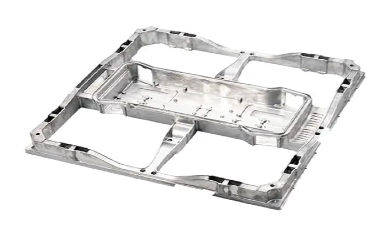
When machining stainless steel, achieving precise tolerances is crucial for ensuring the quality, functionality, and performance of the final part. Tolerances refer to the permissible variations in a part's dimensions, and even small deviations can lead to operational issues, product failure, or inefficient performance, especially in industries like aerospace, automotive, and medical devices. Stainless steel, with its inherent hardness, resistance to corrosion, and heat retention properties, presents unique challenges in controlling tolerances. The process of machining stainless steel requires careful consideration of factors such as material properties, tool selection, machining techniques, and precision machinery. By mastering tolerance control, manufacturers can produce high-quality stainless steel parts that meet the exacting standards required in critical applications, ensuring durability, reliability, and optimal performance.
Understanding Tolerances in Stainless Steel Machining
1.Definition of Tolerances:
Tolerances are the permissible variations in a part’s dimensions, defined by the design specifications. In machining, these variations are necessary because no manufacturing process is perfectly precise. Tolerances specify the upper and lower limits for each critical measurement of a part. For example, if a part is designed to be 50mm in diameter, a tolerance of ±0.1mm would allow the final part to measure between 49.9mm and 50.1mm, ensuring it fits the intended design requirements.
2.Types of Tolerances:
Tolerances can be broadly categorized into two types: dimensional and geometric. Both types are crucial for stainless steel machining, where precision is essential.
Dimensional Tolerances:
These refer to the allowable variations in linear dimensions, such as length, width, height, or diameter. For example, if the diameter of a stainless steel shaft is specified as 50mm ±0.1mm, the tolerance ensures that the finished part’s diameter is within the specified range. Dimensional tolerances are often expressed using symbols like ±, which indicate the amount of variation allowed.
Geometric Tolerances:
These define the permissible variation in the shape, orientation, and location of features on a part. Examples of geometric tolerances include:
Flatness: The allowable variation in a flat surface’s smoothness.
Circularity: The tolerance for how close the actual circle of a part is to a perfect circle.
Perpendicularity: The tolerance on how perpendicular one surface is to another.
Runout: The allowable variation in the concentricity of a rotating part.
Geometric tolerances are often specified to ensure that parts assemble correctly and function as intended, especially in high-precision applications like aerospace and automotive components.
3.Application to Stainless Steel Parts:
Stainless steel’s unique properties—such as its hardness, corrosion resistance, and tendency to work-harden during machining—can make maintaining tight tolerances more challenging. For example, stainless steel alloys like 17-4 PH and 316 may require more precise machining due to their hardness and toughness. The dimensional tolerances are critical for ensuring that parts like shafts, valves, and fittings align and function properly. Geometric tolerances are equally important in ensuring that features like holes, slots, and surfaces fit together precisely without causing misalignment or poor performance.
Factors Influencing Tolerance Control in Stainless Steel CNC Machining
1. Material Properties:
Hardness: Hard stainless steels like 17-4 PH are tougher to machine, requiring wear-resistant tools like carbide. Harder materials can lead to tool wear, affecting tolerance.
Work Hardening: Stainless steel work-hardens during machining, making subsequent cuts harder and reducing precision. This can cause tool deflection and dimensional variations.
Thermal Properties: Stainless steel has low thermal conductivity, leading to heat buildup during machining. Thermal expansion can cause dimensional changes, especially in tight tolerance parts.
2. Machining Process:
Milling: Involves rotating tools to cut material, where tool deflection and heat buildup can impact precision. Tool stability is crucial for tight tolerances.
Turning: Precision is influenced by spindle alignment and cutting forces. Steady feed rates and sharp tools are needed for accurate results.
Drilling: Achieving precise hole dimensions depends on proper tool selection and cutting speeds to avoid issues like burr formation or misalignment.
3. Tool Selection:
Tool Material: Carbide and ceramic tools are ideal for harder stainless steel alloys due to their wear resistance. HSS tools are better for softer grades like 304.
Tool Geometry: The tool’s rake angle, clearance angle, and cutting edge should be optimized to improve chip removal, reduce cutting forces, and maintain tolerance.
Tool Wear: Regular monitoring and maintenance are critical, as worn tools can cause inaccuracies, poor finishes, and increased cycle times.
Techniques for Controlling Tolerances in Stainless Steel Machining
1.Advanced CNC Machinery:
High-precision CNC machines are key to maintaining tight tolerances. Features like 5-axis capabilities and automated tool changers enable precise machining of complex shapes with minimal deviation, reducing human error and ensuring consistent results.
2.Fine-tuned Cutting Parameters:
Adjusting feed rates, cutting speeds, and depth of cut optimizes tolerance control. Slower speeds and feed rates are essential for harder alloys like 17-4 PH, helping reduce tool wear, heat buildup, and tool deflection, resulting in more accurate dimensions.
3.Proper Tool Maintenance:
Regular tool inspections, sharpening, and calibration are crucial for maintaining sharp edges and precision. Worn tools cause inaccuracies, so well-maintained tools ensure better tolerance control, reducing errors and improving consistency.
4.Measurement Systems:
Advanced measurement systems, such as CMMs and laser scanners, are essential for verifying and adjusting tolerances. These systems allow for precise, non-contact measurement during and after machining, ensuring parts meet the required specifications.
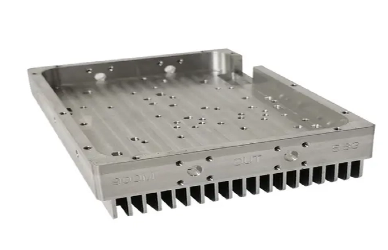
Challenges in Achieving Tight Tolerances in Stainless Steel CNC Machining
1.Thermal Expansion:
Stainless steel’s low thermal conductivity causes thermal expansion during machining. Heat buildup can distort part dimensions, especially for thin-walled or complex parts. Managing heat through coolants, cutting speeds, and temperature control is crucial for maintaining precision.
2.Tool Wear:
As tools wear down, their cutting edges degrade, affecting tool sharpness and causing tool deflection. This leads to inaccuracies over time. Regular tool inspections and maintenance, along with high-quality tools, are necessary to ensure consistent tolerances.
3.Complex Geometries:
Parts with intricate shapes or multiple features are harder to machine with tight tolerances due to tool deflection, vibration, and chip removal issues. Advanced CNC machines and optimized cutting strategies are essential to handle these challenges effectively.
Best Practices for Maintaining Tolerances in Stainless Steel CNC Machining
1.Consistent Tool Monitoring and Replacement:
Regularly check tool condition to prevent wear from affecting tolerance. Replace tools before they degrade too much, especially for harder alloys like carbide or ceramic tools, to ensure consistent precision.
2.Regular Calibration of Machines and Tools:
Routine calibration of CNC machines and tools is essential for maintaining accuracy. Misalignments or tool wear can lead to dimensional errors. Regular checks of machine settings and tool offsets help avoid tolerance issues.
3.Choosing the Right Stainless Steel Alloy for Specific Tolerance Requirements:
Select alloys based on their machinability and required tolerances. Softer alloys like 304 stainless are easier to machine, while harder alloys like 17-4 PH require more precise control due to their work-hardening and hardness properties.
FAQ: Tolerance Control in Stainless Steel CNC Machining
1.How do material properties of stainless steel affect tolerance control?
The hardness, work-hardening, and thermal properties of stainless steel directly impact tolerance control. Harder alloys like 17-4 PH are more challenging to machine and prone to tool wear and thermal expansion during machining, which can lead to dimensional variations. Softer alloys, like 304, are easier to machine, but still require careful heat and cutting force management to maintain precision.
2. What role do CNC machines play in controlling tolerances?
CNC machines are essential for maintaining tight tolerances due to their precision and repeatability. High-precision CNC machines use automated processes, feedback systems, and advanced controls to ensure that cutting paths, tool movements, and part dimensions stay within specified limits. Features like 5-axis machining allow for complex geometries and improved dimensional accuracy.
3. How can tool wear impact tolerance accuracy during stainless steel machining?
Tool wear can significantly affect tolerance accuracy as worn tools cause increased cutting forces and poor cutting edge quality. This leads to tool deflection, inconsistent cuts, and dimensional variations. Regular tool maintenance and early replacement are crucial to maintain tight tolerances throughout the machining process.
4. What is the best way to measure and verify tolerances in stainless steel parts?
Using advanced measurement systems like Coordinate Measuring Machines (CMM) and laser scanners is the best way to measure and verify tolerances. These tools provide precise, non-contact measurements during and after machining, allowing manufacturers to detect any deviations from the desired specifications and ensure high part accuracy.
Conclusion
Effectively controlling tolerances in stainless steel CNC machining requires a combination of precise techniques, high-quality tools, and regular monitoring. Key factors such as material properties, tool wear, and the chosen machining process all play crucial roles in achieving the desired dimensional accuracy. Utilizing advanced CNC machinery, fine-tuning cutting parameters, and ensuring regular tool maintenance are essential to minimize deviations. Additionally, selecting the right stainless steel alloy for the task and leveraging advanced measurement systems like CMMs can significantly improve tolerance control. For high precision in stainless steel parts, it’s important to combine these practices with thorough quality checks and continuous improvement. By carefully managing these aspects, manufacturers can consistently produce parts that meet the most stringent tolerances, ensuring performance, reliability, and long-term functionality. By focusing on both precision and efficiency, manufacturers can achieve optimal results in their stainless steel machining processes.