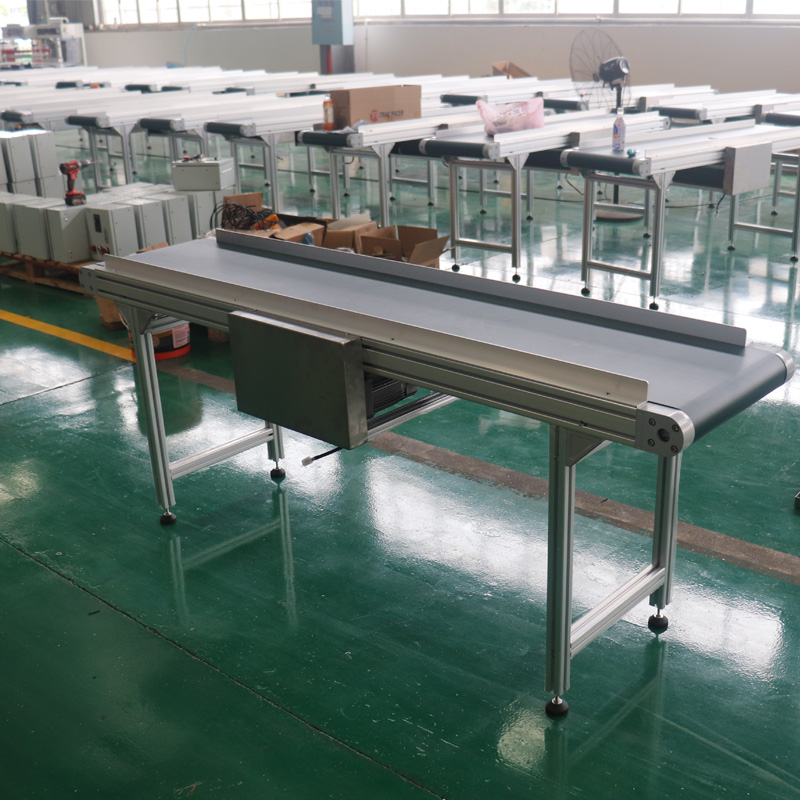
A misaligned or undersized frame compromises the entire Assembly Line Conveyor system. It leads directly to belt mistracking, premature mechanical wear, and automation integration failures. Heavy-duty bulk handling operations often default to welded steel construction. However, light-to-medium manufacturing requires agility without sacrificing structural rigidity. Aluminum profiles offer the standard solution for these dynamic environments. Selecting the right extrusion dictates your initial capital costs, floor load constraints, and future scalability. You need a reliable framework for evaluating these components.
This guide provides a systematic approach for evaluating and shortlisting an Aluminum Conveyor Frame specifically for light-to-medium load environments. We focus heavily on applications within electronics assembly, packaging lines, and automated assembly operations. You will learn how to calculate vital load limits. You will discover how to size extrusions correctly. Ultimately, you will understand how to match the frame architecture perfectly to your specific operational environment.
Key Takeaways
Load capacity calculations must account for unsupported span and acceptable deflection limits, not just static weight.
Sizing matters: 30-series and 40-series T-slot extrusions cover 90% of light-to-medium assembly line conveyor needs.
Modularity drives flexibility; using T-slot frames reduces installation time compared to welded steel while allowing seamless integration of sensors and robotics.
Aluminum is ideal for cleanrooms and general manufacturing but should be evaluated skeptically for harsh chemical washdown environments.
Assessing Load Requirements and Deflection Limits
Static vs. Dynamic Loads
Engineers must differentiate between resting weight and dynamic stress. A stationary product exerts a predictable static weight on the frame. However, an operating Assembly Line Conveyor introduces complex kinetic forces. Frequent starts, abrupt stops, and product accumulation zones create sudden force multipliers. A line of moving boxes suddenly halting transfers massive forward kinetic energy into the frame. Motor startup torque also introduces twisting forces. You must always calculate structural requirements based on these dynamic operational stresses, never just the static product weight.
The Deflection Factor (Engineering Reality)
Absolute frame rigidity remains critical for modern automation. Excessive deflection destroys process precision. If a frame sags even a few millimeters under load, it disrupts everything. Optical sensors lose their precise alignment. Vision systems capture distorted images of barcodes. Robotic pick-and-place arms miss their programmed spatial coordinates. Engineers define this acceptable bending limit as the deflection ratio. You must keep deflection strictly under standard thresholds. We typically recommend an L/250 to L/300 deflection limit for high-precision robotic assembly lines.
Unsupported Span Limitations
A fundamental physical rule governs aluminum extrusions. Doubling the unsupported span drastically reduces your overall load-bearing capacity. You cannot stretch a profile endlessly. Spanning too far without intermediate support guarantees sagging and eventual structural failure. Most medium-load systems require intermediate leg supports every six to eight feet. You must calculate these span distances meticulously during the initial design phase.
Single-Piece vs. Multi-Piece Frames
Conveyor belt width directly dictates your frame construction strategy. We use a clear sizing threshold. Frame widths under 12 inches often utilize single-piece extrusions. A solid, single-piece foundation offers maximum rigidity. It naturally resists twisting forces efficiently. Wider belts demand a more complex, multi-piece approach. They require engineered cross-bracing underneath. This internal bracing prevents the side rails from bowing inward under high belt tension.
Sizing the T-Slot Aluminum Conveyor Frame
Profile Series Breakdown (30 vs. 40 vs. 50 Series)
Selecting the right T-slot profile balances capital cost against structural integrity. You generally face three primary options.
30 Series (30x30mm): Optimal for highly localized, lightweight micro-conveyors. We specify this size frequently for sensitive electronics assembly. It also works perfectly for secondary upper guide rails.
40 Series (40x40mm): The undisputed industry standard for medium-load Assembly Line Conveyor equipment. It offers the best possible balance of strength-to-weight. It also guarantees maximum compatibility with third-party automation accessories.
50 Series (50x50mm): Typically reserved for heavy payloads or massive structural bases. It proves absolute overkill for standard light/medium tracks. We normally reserve 50-series extrusions exclusively for the main floor-mounted support legs.
T-Slot Series Comparison Chart
Profile Series | Slot Width | Primary Application | Load Category |
|---|
30 Series | 8mm | Micro-conveyors, top guardrails | Light Load / Structural Guides |
40 Series | 8mm / 10mm | Main conveyor beds, sensor mounts | Medium Load / Industry Standard |
50 Series | 10mm | Base support legs, heavy gantry frames | Heavy Load / Base Support |
Hybrid Sizing for Better Efficiency
We strongly advise against over-engineering your entire system. Utilizing 50-series extrusions everywhere adds unnecessary weight and material expense. Smart engineers utilize hybrid sizing strategies instead. For example, you build a robust load-bearing base using rigid 40-series profiles. Then, you attach lightweight 30-series profiles for the upper guardrails and optical sensor mounts. This targeted approach strips unnecessary weight from the overall system while maintaining structural performance.
Matching Frame Architecture to the Conveyor Type
Slider Bed vs. Roller Bed Support
The underlying aluminum architecture must match your specific conveyance mechanism perfectly.
Slider Beds: These systems require perfectly flat, smooth aluminum top profiles. Sometimes engineers add UHMW plastic wear strips. The belt glides directly over this metal or plastic surface. This continuous support minimizes internal friction. Slider beds excel at moving light, fragile items. Electronics and small packages slide smoothly without vibration. They also provide highly stable platforms for robotic positioning tasks.
Roller Beds: These operate differently. They require frame extrusions featuring specialized inner mounting channels. These specific channels secure the steel roller axles rigidly in place. Roller beds handle heavier, irregular loads far better than slider beds. They manage heavy plastic totes and rigid cardboard boxes effortlessly.
Belt Tracking Implications
Belt mistracking plagues poorly designed manufacturing facilities. A twisting frame causes immediate edge fraying. It destroys expensive belts in weeks. A highly rigid, perfectly square Aluminum Conveyor Frame prevents this common maintenance nightmare completely. Precision aluminum extrusions maintain strict dimensional stability. They keep the drive and tail pulleys perfectly parallel over long distances. This continuous geometric squareness ensures the belt tracks dead-center during 24/7 operation.
Evaluating Environmental Compliance and Surface Durability
Anodized Finishes
Raw aluminum oxidizes quickly in humid factory settings. Standard clear anodized aluminum solves this problem effectively. The electrochemical anodizing process creates a dense, protective oxide surface layer. It seals the raw metal against ambient humidity and mild airborne chemicals. This highly durable finish remains virtually mandatory for professional industrial environments. It resists scratches and maintains a highly professional aesthetic over decades of use.
Cleanroom and Electronics Manufacturing
Electronics and medical device sectors demand strict particulate control. Standard welded steel frames fail these cleanroom standards immediately. Steel sheds microscopic rust particles. Painted steel inevitably chips and flakes over time. This shedding contaminates sterile environments rapidly. Anodized aluminum minimizes particulate generation dramatically. It serves as a strict prerequisite for semiconductor manufacturing. Medical device Assembly Line Conveyor systems rely entirely on these clean aluminum frames to meet ISO compliance.
Transparent Limitations (When NOT to use aluminum)
Trust requires acknowledging material limits openly. Standard aluminum frames fail miserably in caustic environments. We evaluate these limitations skeptically. High-pressure chemical washdowns strip away the protective anodized layer quickly. Raw meat processing plants use aggressive cleaning acids and caustics daily. Do not specify aluminum for these demanding zones. Sanitary stainless steel remains the strict, non-negotiable compliance standard for food-grade washdown areas.
Material Selection Checklist
Use Aluminum When: You need modularity, low particulate shedding (cleanrooms), and fast deployment.
Use Carbon Steel When: You face massive bulk handling loads or extreme impact forces.
Use Stainless Steel When: You operate in chemical washdown zones or raw food processing environments.
Deployment Speed and Automation Modularity
Installation Efficiency
Frame selection transforms your initial deployment process entirely. Traditional welded steel frames demand highly specialized labor. You must cut, grind, weld, and paint everything on-site. T-slot aluminum eliminates this slow workflow. You bolt the system together quickly using standard brackets. Your internal maintenance team can assemble and modify the frame using basic hand tools. You avoid relying heavily on outside welding work for routine changes.
Floor Load and Shipping Considerations
Total mass impacts your facility planning. Aluminum provides a meaningful weight reduction compared to equivalent steel structures. This lighter footprint matters significantly. It mitigates structural floor load limits in older, multi-story manufacturing facilities. A lighter frame also helps reduce freight and handling demands during delivery and installation.
Future-Proofing
Manufacturing demands change rapidly. Standardized T-slots natively support ongoing automation upgrades without structural rework. You can mount emergency stops quickly. Photoelectric sensors attach instantly anywhere along the track. Motor drives bolt directly into the T-slots without any custom drilling.
Consider these powerful modular advantages:
You can micro-adjust side guide rails in minutes to accommodate new product dimensions.
You can install vision cameras precisely where needed without welding new brackets.
You can relocate the entire Aluminum Conveyor Frame easily when factory layouts change.
You can repurpose individual extrusions for entirely new machine builds later.
This inherent flexibility makes aluminum especially attractive for facilities that expect regular automation updates or process changes.
Conclusion
Choosing the right structural foundation requires a systematic engineering approach. We recommend following a strict shortlisting logic. First, define your maximum dynamic load and calculate your longest unsupported span. Second, select the core profile series, prioritizing 30-series or 40-series extrusions for light-to-medium tasks. Third, match the underlying frame architecture to your required slider or roller belt type. Finally, verify material compatibility, keeping aluminum strictly out of harsh chemical washdown zones.
You must take a proactive next step. Never rely solely on basic online extrusion catalogs. We strongly recommend engaging directly with an experienced vendor. Demand 3D CAD models of your proposed frame. Ask for empirical deflection calculators. This rigorous engineering collaboration ensures your new frame integrates flawlessly with your existing factory automation infrastructure. It prevents costly misalignment issues before deployment begins.
FAQ
Q: What is the difference between V-slot and T-slot aluminum profiles for conveyors?
A: V-slots are designed primarily to guide linear motion wheels (like in CNCs), while T-slots are engineered for structural rigidity and secure, static fastening of frame components.
Q: How far can an aluminum conveyor frame span without center supports?
A: It depends strictly on the profile thickness (e.g., 40x80mm vs 40x40mm) and allowable deflection, but generally, spans exceeding 6–8 feet in medium-load applications require intermediate legs to prevent sagging.
Q: Can I easily retrofit an existing steel assembly line conveyor with aluminum sections?
A: Yes, via transition brackets, though engineers must account for the difference in thermal expansion and load distribution between the two materials.