Selecting the wrong manufacturing process for metal components introduces severe risks. It inevitably leads to inflated unit costs. It causes excessive material scrap. It can even compromise the structural integrity of your product. Engineers constantly face this critical crossroads. They must take concepts into full production smoothly. At the design-finalization stage, choosing between extrusion and subtractive machining requires careful calculation. You must balance geometric constraints, tolerance requirements, and production volume carefully. We provide engineering and procurement teams with a definitive framework here. You can systematically evaluate geometric constraints and tolerance requirements. This guide matches your exact geometry, alloy grade, and volume targets to the right method. You will discover how to make more effective manufacturing decisions.
Key Takeaways
Geometry Dictates Process: Extrusion is strictly for parts with a continuous cross-section, while CNC machining accommodates complex, multi-axis 3D geometries.
Volume Thresholds Matter: CNC machining offers zero-tooling costs for fast, low-volume production; extrusion requires upfront die investments that become more efficient at scale.
Alloy Suitability Varies: Not all aluminum grades are easily extrudable (e.g., 7075 is notoriously difficult), whereas most standard alloys are highly machinable.
The Hybrid Reality: The most effective route for complex, high-volume profiles is often a combination: extruding the near-net shape, then CNC machining critical tolerances and secondary features.
Process Fundamentals: Geometric Constraints and Capabilities
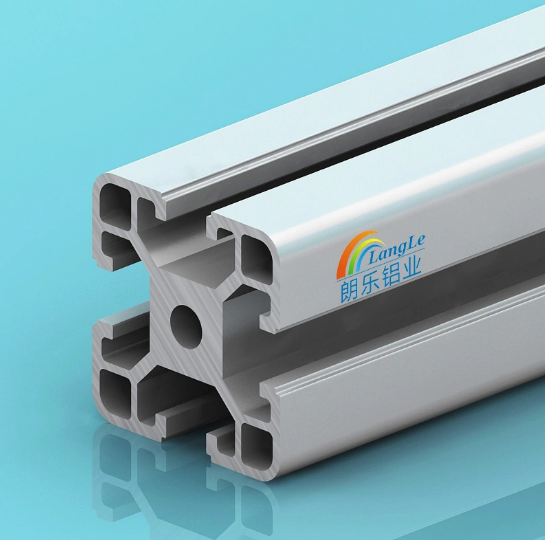
Extrusion pushes heated aluminum billets through a custom steel die. It forms continuous linear profiles efficiently. Parts must maintain a constant cross-section throughout their length. We see this process used heavily across multiple industries. It builds structural frames, heat sinks, tracks, and electronic housings. Extrusion excels at producing long, uniform components quickly.
However, the extrusion process brings distinct geometric limits. You cannot produce features like blind holes directly from the die. You also cannot vary wall thicknesses along the Z-axis. Transverse pockets or side-facing cutouts remain impossible during the raw extrusion phase. Planners must respect these boundaries early in the design cycle.
Subtractive manufacturing relies on completely different principles. A rotating cutting tool removes material from a solid block. This allows for undercuts, intersecting features, and complex internal geometries. It is optimal for high-precision aerospace, medical, and intricate mechanical CNC Machining Parts. Subtractive methods handle highly intricate multi-axis 3D models effortlessly.
Machining carries its own implementation risks. Deep pockets require long cutting tools. These extended tools vibrate and cause surface chatter. Sharp internal corners increase machine cycle time significantly. They often necessitate specialized tooling. If your design demands perfectly sharp internal corners, you will face higher machining complexity.
DFM: Design Rules for Aluminum Machining Parts vs Extrusion
Tolerances and Precision
Extrusion relies on thermal processes and mechanical pulling. Standard dimensional tolerances follow industry guidelines like ANSI H35.2. These standard limits are comparatively loose. You can expect tolerances ranging from ±0.010" to ±0.020". The exact variance depends on the overall profile size. Such variance is often unacceptable for tight-fit mechanical assemblies.
Subtractive methods deliver much higher precision. Modern milling centers achieve tight aerospace-grade tolerances effortlessly. Standard machining holds ±0.001" to ±0.005" consistently. Tighter limits become possible through specialized precision setups. We always recommend machining when mating surfaces require absolute geometric perfection. You guarantee accurate alignment for complex Aluminum Machining Parts.
Wall Thickness and Proportions
Extrusion requires uniform wall thicknesses to succeed. Aluminum cools rapidly as it exits the steel die. Uneven cooling causes warping and severe structural distortion. Thin webs connected directly to thick solid sections will almost certainly bend. Designers must keep wall thickness ratios as consistent as possible.
Milling operations comfortably accommodate variable wall thicknesses. You can design thick bases transitioning into delicate heat fins. However, extremely thin walls below 0.020" introduce significant manufacturing risk. Tool pressure can push the thin wall away from the cutter. This action causes chatter, poor surface finishes, and permanent deformation.
Radii and Corners
Sharp internal corners cause severe stress concentrations in extrusion dies. High friction and pressure can lead to premature die failure. Designers must apply minimum radii to all profile transitions. We recommend typical radii between 0.015" and 0.030" for standard profiles. This simple rule prolongs die life exponentially.
Cutting tools are naturally round. Inside corners always require radii corresponding to the end mill diameter. Sharp outside corners remain completely trivial to machine. If a design demands sharp inside corners, engineers must rethink the mating parts. Alternatively, they must accept longer cycle times for specialized clearing passes.
Design Feature | Extrusion Limits | Subtractive Machining Limits |
|---|
Standard Tolerance | ±0.010" to ±0.020" | ±0.001" to ±0.005" |
Wall Thickness | Must be highly uniform | Variable, but keep > 0.020" |
Internal Corners | Min 0.015" radius required | Must match tool diameter |
Cross-Section | Strictly constant (2D) | Highly variable (3D) |
Volume Economics and Cost Drivers
Extrusion requires custom steel dies. This creates a noticeable upfront tooling cost. This Non-Recurring Engineering (NRE) expense serves as a barrier for early-stage prototyping. However, these custom die costs become less significant at high-volume production. Once the die exists, running material through it becomes highly efficient.
Subtractive routing requires CAM programming and custom fixturing. It involves zero custom die costs. This reality enables immediate manufacturing start times. You can begin cutting metal on day one. Tooling investments remain virtually zero. This makes subtractive manufacturing ideal for rapid iteration and product development.
We can outline the volume threshold conceptually. Subtractive manufacturing is often effective for 1 to roughly 500 units. You pay more per part but avoid heavy upfront investments. Extrusion becomes increasingly attractive once production scales past the die-cost amortization point.
Extrusion produces near-net-shape profiles. This results in minimal raw material waste. You only lose material during the final cut-to-length stage. Subtractive manufacturing creates significant metal chips. Cutting a complex housing from a solid billet wastes massive amounts of raw material. High "buy-to-fly" ratios heavily inflate material usage for large Aluminum Parts. You literally pay for material you immediately discard.
Volume Crossover Chart (HTML Summary)
Production Volume | Recommended Process | Primary Cost Driver |
|---|
1 - 100 Units | Direct CNC | Machine time & material waste |
100 - 500 Units | Direct CNC (Usually) | Machine time & material waste |
500 - 1,000 Units | Process Crossover Zone | Evaluate die cost vs cycle time |
1,000+ Units | Extrusion / Hybrid | Initial die cost (amortized quickly) |
Material Selection: Extrudability vs. Machinability
The 6000 series acts as the industry standard for extrusions. Alloys like 6061 and 6063 are highly extrudable. They push through dies smoothly without tearing or cracking. These grades offer excellent surface finishes. They resist environmental corrosion very well. They are also easily machined for secondary operations down the line.
Engineers often select the 7000 series for extreme structural applications. Alloy 7075 exhibits phenomenal tensile strength. It remains ideal for high-stress aerospace and defense applications. However, it suffers from extremely poor extrudability. The material's high yield strength and flow resistance destroy extrusion dies quickly. Consequently, manufacturers typically cut 7075 strictly from solid billet.
Extruded materials develop a highly directional grain structure. The material stretches as it pushes through the die. This elongates the internal grain structure noticeably. It creates an anisotropic property profile. Strength varies significantly parallel versus perpendicular to the extrusion direction. Billet material maintains much more uniform structural integrity. Subtractive machining preserves this isotropic strength across all axes perfectly.
The Hybrid Approach: Extruding Then Machining
Neither process works perfectly in isolation for complex profiles. High-volume parts often demand a smarter manufacturing strategy. Extrusion lacks tight tolerance control for precise mechanical fits. Pure subtractive cutting wastes too much time and raw material at scale. The hybrid approach resolves these competing challenges perfectly. It blends the best aspects of both distinct methods.
The workflow follows a logical progression. You begin at the extrusion press. You extrude a custom profile to establish the bulk geometry. This heavily reduces overall material waste immediately. It also eliminates the longest roughing cuts. Next, you load the raw extrusion into a rigid milling fixture. The machine adds precision tolerances and tapped holes. It easily handles complex lateral cutouts.
This workflow drastically reduces expensive spindle time. Raw material use drops quickly. You buy near-net shapes instead of heavy rectangular billets. The final product achieves incredibly tight tolerances. Standard extrusions simply cannot meet these precision limits alone. You achieve the ultimate balance of speed, precision, and manufacturing efficiency. We strongly recommend this path for scalable production runs.
Shortlisting Logic: Which Process Matches Your Success Criteria?
Choosing your path requires strict adherence to project constraints. You must analyze your geometric needs and budget limits. We created a simple logic matrix for quick decision-making. Review the following scenarios carefully.
Choose Direct CNC Machining if:
Your production volume is low.
The product design is still iterating frequently.
Geometry requires changes in cross-section or multiple complex axes.
Mechanical requirements dictate high-strength 7000-series alloys.
Choose Extrusion if:
The part is strictly linear with a constant cross-section.
Volume is high enough to easily absorb the initial die cost.
Standard industry tolerances are entirely acceptable for your assembly.
You want to minimize per-part material usage.
Choose the Hybrid Approach if:
You need high volume production.
The part features a constant bulk geometry.
You also require specific tight-tolerance features like threads or pockets.
Do not let poor planning inflate your manufacturing budgets. You must map your requirements against these specific capabilities early.
Conclusion
Your final sourcing strategy comes down to three core factors. You must evaluate geometric constraints, material grade, and total production volume. Understanding these three pillars prevents costly manufacturing delays. Subtractive methods win early-stage development through sheer flexibility. Extrusion wins long-term production runs through unmatched material efficiency. Both play vital roles in modern supply chains.
Before requesting vendor quotes, run a rigorous DFM audit on your current models. See if a fully machined part can be modified for extrusion. Small design tweaks often improve manufacturability at scale. Alternatively, analyze if a hybrid approach offers the best long-term fit for your production goals. You might be surprised by the advantages a combined workflow generates.
Prepare your final STEP files now. Outline your annual volume projections clearly. Consult with a reliable manufacturing partner capable of handling both processes seamlessly. They will help you finalize the most suitable production path. Making the right choice today ensures smoother scaling tomorrow.
FAQ
Q: Can you prototype an extruded aluminum part?
A: True prototypes require creating a physical steel die. This involves upfront costs and longer lead times. For fast, early-stage testing, rapid prototyping usually relies on CNC machining the exact extrusion profile from a solid block first. This simulates the geometry accurately before committing to die fabrication.
Q: Are CNC machined aluminum parts stronger than extruded parts?
A: Yes, generally. Billet aluminum used in machining possesses a uniform, isotropic grain structure. This provides consistent strength across all axes. Extruded parts have an anisotropic grain structure. They are stronger parallel to the extrusion flow but weaker perpendicular to it. High-strength alloys like 7075 are also exclusive to machining.
Q: What is the minimum order quantity (MOQ) to justify an extrusion die?
A: Extrusion mills typically base MOQs on material weight rather than unit count. They often start around 500 to 1,000 pounds of raw material. In contrast, CNC machining offers a true unit-of-one capability. If you only need 50 parts, machining is almost always the more economical choice.