Choosing the right T-slot aluminum profile is one of the most important decisions in any framing project. Whether you are building a machine frame, an aluminum workbench, a conveyor support structure, or a protective enclosure, the profile you choose will directly affect rigidity, safety, assembly stability, and total project cost.
Many buyers make the mistake of selecting a profile only by appearance or habit. A profile that looks strong enough may still deflect too much over a longer span. On the other hand, using a much larger profile than necessary can increase material cost, add weight, and make the structure less efficient to build.
That is why load and span should always be the starting point when selecting a T-slot aluminum profile.
In this guide, we will explain how profile size affects structural performance, how to think about light-duty, medium-duty, and heavy-duty applications, and how to balance strength, weight, and cost when choosing the right aluminum framing profile.
Why Load and Span Matter in Aluminum Framing
A T-slot aluminum frame is not judged only by whether it can hold something. It also needs to perform well under real working conditions. In most projects, the key question is not simply “Can the frame support the load?” but also:
Will it stay rigid enough during use?
Will it deflect too much over the span?
Will vibration or repeated motion affect stability?
Will the structure remain practical and cost-effective?
This is why load and span must be considered together.
Load refers to the force the profile needs to carry, including equipment weight, workpiece weight, dynamic movement, and any extra operational stress.
Span refers to the unsupported length between connection points or structural supports.
A profile that works well over a short distance may not be rigid enough when the span becomes longer. Likewise, a profile that handles a small static load may not perform well if the application involves motion, vibration, or repeated impact.
How Profile Size Affects Strength and Rigidity
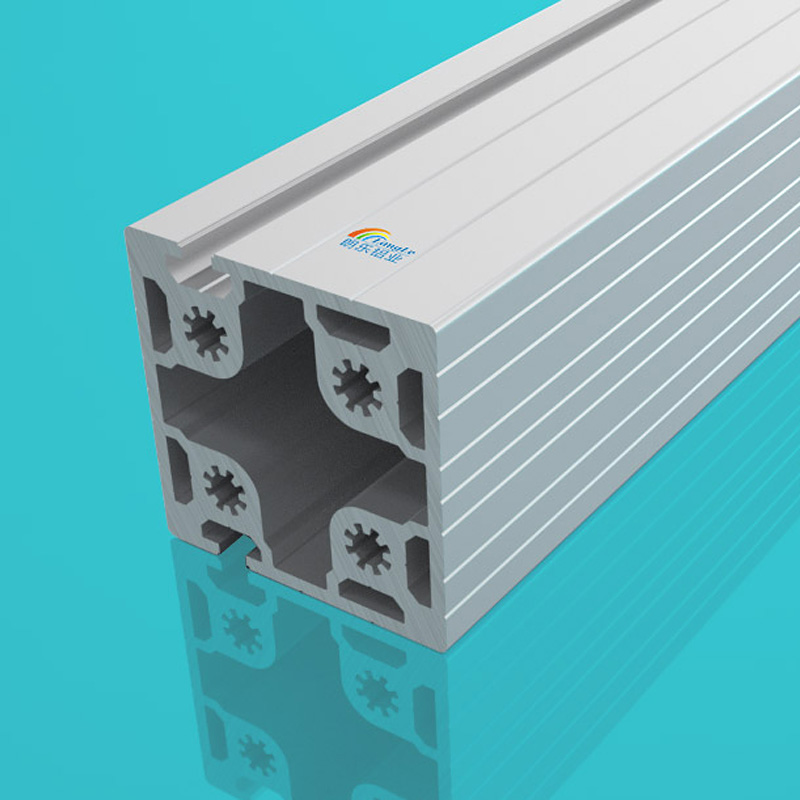
In aluminum framing systems, larger profiles generally provide better rigidity and load capacity than smaller profiles. This is not only because they use more material, but because the overall section geometry improves resistance to bending and deflection.
In practical terms:
a smaller profile is easier to handle and lower in cost, but it is better suited to short spans and lighter loads
a larger profile usually performs better in long-span or higher-load applications, but increases weight and budget
a heavier wall or larger cross-section often improves frame stability in demanding projects
This means profile selection is usually a balance. The goal is not to choose the biggest profile available. The goal is to choose the smallest profile that still performs reliably for the project.
A Simple Selection Mindset
Before getting into specific applications, this basic logic is useful:
| Condition | Typical Effect on Profile Choice |
|---|
| Higher load | Usually requires a stronger or larger profile |
| Longer span | Usually requires better rigidity and deflection control |
| Frequent motion or vibration | May require a more robust structure |
| Light-duty static use | Smaller profiles may be sufficient |
| Precision or stability-sensitive equipment | Larger or stronger profiles may be safer |
This table is not a substitute for engineering calculation, but it is a useful way to start thinking about selection.
Light-Duty vs Medium-Duty vs Heavy-Duty Applications
One practical way to choose a T-slot aluminum profile is to think in terms of application level.
Light-Duty Applications
Light-duty applications usually involve:
In these projects, the loads are usually limited and the span is often short. Smaller T-slot profiles can often provide enough strength while keeping the structure lighter and more cost-effective.
Medium-Duty Applications
Medium-duty applications often include:
assembly workbenches
machine stands
modular enclosures
medium-size conveyors
workstation frames
These structures usually need a better balance between rigidity, flexibility, and cost. In many cases, buyers choose mid-size profiles because they offer stronger support without making the frame unnecessarily heavy.
Heavy-Duty Applications
Heavy-duty applications may include:
large automation frames
long-span support structures
conveyor frames carrying larger loads
equipment bases
industrial platforms or high-load support assemblies
In these projects, the main challenge is often deflection and structural stability rather than simple weight support. Larger profiles are commonly preferred because they improve overall stiffness and reduce the risk of weak frame behavior over longer spans.
Typical Selection Thinking by Application
| Application Type | Usual Structural Need | Profile Selection Tendency |
|---|
| Small enclosure or guard | Light load, short span | Smaller profile often works |
| Workbench or inspection table | Moderate load, daily use | Medium profile usually preferred |
| Machine frame | Higher rigidity and stability | Medium to large profile often needed |
| Conveyor support | Continuous load and span control | Medium or large profile depending on length |
| Large automation structure | Heavy load and long span | Larger profile usually necessary |
Again, the actual choice depends on the real design, but this kind of grouping helps buyers avoid purely visual selection.
When a Larger Profile Is Necessary
Buyers often ask when they should step up to a larger aluminum profile. In most cases, the answer comes down to one or more of the following conditions:
1. The Span Is Getting Too Long
A longer unsupported distance increases the chance of bending or noticeable deflection. Even when the load itself is not extremely heavy, long spans often require stronger profiles to maintain rigidity.
2. The Equipment Needs Better Stability
If the frame supports machinery, automation systems, moving assemblies, or equipment that depends on alignment, rigidity becomes much more important. In these cases, a larger profile often helps prevent unwanted movement or flexing.
3. The Load Is Not Just Static
A frame carrying a stationary light box is very different from a frame supporting moving components, repeated handling, or vibration. Dynamic loads often justify a stronger profile even if the nominal weight seems moderate.
4. Future Expansion Is Likely
Some buyers choose a slightly larger profile when they expect future upgrades, accessories, heavier payloads, or structural extensions. This can reduce redesign later.
5. Safety Margin Matters
In industrial projects, buyers often prefer not to design too close to the minimum. A larger profile can provide a better operating margin where reliability matters.
How to Balance Load Capacity, Weight, and Cost
One of the most practical challenges in T-slot framing is finding the right balance.
If you choose a profile that is too small, the frame may deflect too much, feel weak, or require extra supports later.
If you choose a profile that is too large, the project may become heavier, more expensive, and less efficient than necessary.
The best choice is usually based on three questions:
How much load must the profile really support?
Do not estimate only the main equipment weight. Also think about tools, workpieces, operator interaction, add-on components, and any moving or impact loads.
How long is the unsupported span?
A small profile may work well at one length but not at another. Span often changes the decision more than buyers expect.
How important is rigidity compared with budget?
In a simple storage frame, slight deflection may be acceptable. In a machine structure or conveyor support, better rigidity may be worth the extra cost.
A strong purchasing decision is rarely about choosing the cheapest profile. It is about choosing the profile that performs reliably without creating unnecessary overspending.
Common Selection Mistakes
Many problems in aluminum framing projects come from selection mistakes made early in the design phase.
Choosing Only by Profile Series Name
A buyer may assume that one common series always works because it worked in a previous project. But different loads and spans require fresh evaluation.
Ignoring Span
Some users focus only on weight and forget that a long span can cause noticeable deflection even under moderate load.
Underestimating Dynamic Loads
Frames used in automation, conveyors, or repeated-operation areas may experience more stress than static weight figures suggest.
Oversizing Everything
Using large profiles everywhere may feel safe, but it can also increase cost and weight unnecessarily. Good design uses stronger sections where needed, not everywhere by default.
Forgetting Connector Strength
Even a good profile can underperform if the joints and accessories are not selected correctly. Frame strength is not just about the extrusion itself.
How to Choose the Right Profile for Machine Frames
For machine frames, rigidity is often more important than simple load support. A machine frame may need to support motion systems, panels, tooling, sensors, or mounted equipment. In these situations, excessive frame flex can affect alignment, stability, and overall equipment performance.
When choosing a profile for machine frames, buyers should pay attention to:
expected equipment weight
moving loads or vibration
frame height and width
unsupported spans
need for future modification or accessory mounting
In many machine applications, it is worth choosing a profile with stronger rigidity rather than only meeting minimum support needs.
How to Choose the Right Profile for Workbenches
For aluminum workbenches, the choice depends on what the bench is used for. A light inspection bench may not need the same structure as a heavy assembly bench.
Buyers should think about:
tabletop load
whether operators lean or press on the bench regularly
tool mounting and storage add-ons
need for ESD, lighting, or overhead accessories
desired balance between mobility and strength
A well-designed workbench should feel stable in daily use, not only in static load testing.
How to Choose the Right Profile for Conveyors
For conveyor frames, span is often especially important. Conveyors may run across longer distances, support continuous loads, and experience vibration or repeated force during operation.
When selecting profiles for conveyor structures, buyers should evaluate:
conveyor length
expected load per section
support spacing
motor or drive-related vibration
guarding or accessory attachment needs
In conveyor projects, a profile that seems acceptable at first may become too flexible if support spacing is wide. This is why conveyor applications often need more careful profile selection than small static frames.
A Practical Buying Approach
For most buyers, the best selection process looks like this:
Define the application type
Estimate the real load, not just the nominal load
Measure the key unsupported spans
Decide whether rigidity, cost, or weight matters most
Review connector and accessory requirements
Select the profile that gives a reliable balance, not only the smallest price
If the project is more complex, using design tools, 3D models, or supplier support can make the decision much easier.
Final Thoughts
Choosing the right T-slot aluminum profile by load and span is not just a technical detail. It is one of the main factors that determines whether a frame will be strong, stable, and cost-effective in real use.
Load tells you how much force the frame must handle. Span tells you how difficult that job becomes. Together, they shape the real profile requirement far more accurately than appearance or habit ever can.
For light-duty projects, a smaller profile may be enough. For machine frames, workbenches, and conveyors, buyers often need to think more carefully about rigidity, future use, and structural margin. The best profile is not necessarily the biggest one. It is the one that gives the right balance of strength, stability, weight, and cost for the application.
If buyers start with load and span instead of guesswork, they will usually make a better decision from the beginning.
As a manufacturer focused on industrial aluminum profiles, accessories, and customized processing, Hunan Langle Technology Co., Ltd. supplies a wide range of solutions including T-slot aluminum profiles, V-slot profiles, aluminum profile accessories, machine enclosures, workbenches, conveyors, safety fences, CNC machining parts, timing pulleys, and radiator aluminum profiles. With experience in profile production, machining, and project support, we are committed to helping customers choose more suitable aluminum framing solutions based on real application requirements. If you are selecting a T-slot aluminum profile for a machine frame, workbench, conveyor, or other industrial structure, you are welcome to contact our team for further discussion.
FAQs
Why are load and span important when choosing a T-slot aluminum profile?
Because both factors affect how much a profile may bend or deflect in real use. A profile that works well under a short span may not perform the same way over a longer distance.
Is a larger aluminum profile always better?
Not always. A larger profile usually improves rigidity, but it also increases weight and cost. The best choice is the one that matches the application efficiently.
What kind of projects need stronger T-slot profiles?
Machine frames, conveyors, heavy-duty workbenches, and long-span structures often need stronger or larger profiles.
Can a smaller profile be used in industrial applications?
Yes, if the load is light, the span is short, and the application does not require high rigidity. Small profiles are often suitable for guards, enclosures, and compact frames.
Should I choose a profile only by load rating?
No. You should also consider span, rigidity requirements, vibration, connection methods, and future expansion needs.