In today’s competitive manufacturing landscape, productivity, efficiency, and workplace aesthetics have become equally important. Modern factories are no longer dim, cluttered spaces filled solely with heavy machinery; they are now engineered environments designed for workflow optimization, safety, and even visual harmony. Within this transformation, aluminium workbenches have emerged as one of the most versatile and forward-thinking pieces of industrial furniture.
These workbenches combine structural integrity, lightweight performance, and aesthetic refinement—offering manufacturers the perfect balance between form and function
1. The Evolution of Factory Design
For decades, industrial design prioritized only durability and cost. Workbenches were often built from steel or wood—strong but heavy, and often prone to corrosion or wear. However, as lean manufacturing and modular production systems gained traction, factories began seeking solutions that could support frequent reconfiguration, cleanliness, and visual standardization.
Aluminium workbenches fit seamlessly into this new paradigm. Their clean metallic finish complements the sleek layouts of smart factories, while their modular construction enables customization and adaptability—two key principles of Industry 4.0 manufacturing environments.
Factories are no longer designed as static spaces; they are dynamic systems that must evolve with production demands. Aluminium workbenches, due to their lightweight yet rigid profiles, are ideal for facilities that need to move, expand, or retool frequently without sacrificing performance.
2. Aesthetic Value: The Look of Modern Efficiency
Sleek and Professional Appearance
The visual appeal of aluminium is undeniable. Its naturally bright, matte silver finish reflects light efficiently, enhancing visibility in work areas and giving factories a cleaner, more modern atmosphere. Unlike painted steel benches that may chip or wooden surfaces that wear and absorb stains, aluminium workbenches retain their color and texture over time. They resist corrosion, oxidation, and fading, ensuring that the workspace always appears neat and well-maintained—even after years of continuous use.
This sleek, metallic finish projects an image of precision and professionalism, which aligns with the identity of modern manufacturing facilities that emphasize innovation and quality. In industries where clients or inspectors frequently tour production lines, the appearance of equipment can influence perceptions of operational excellence. Aluminium workbenches, with their refined aesthetic, subtly communicate efficiency, order, and reliability.
Moreover, workplace psychology research supports the idea that visually appealing environments can improve morale and performance. A well-lit, organized, and aesthetically coherent workspace encourages employees to take pride in their surroundings. Workers who feel they are part of a clean and professional environment tend to handle tools and materials with greater care. This translates to better product quality, fewer accidents, and improved long-term productivity.
Consistency in Factory Design
Modern factories increasingly adopt visual management systems to improve workflow, safety, and efficiency. These systems often use color-coded zones, standardized layouts, and cleanroom-inspired organization to promote clarity and discipline. Aluminium workbenches integrate seamlessly into these systems due to their neutral color palette, clean lines, and modular adaptability.
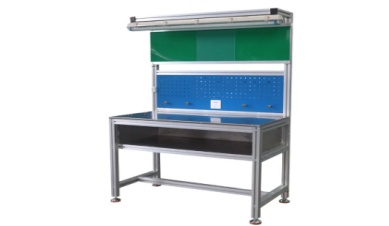
Their extruded aluminium profiles can be customized to match the surrounding equipment—such as machine frames, conveyors, and assembly stations—allowing factories to maintain a consistent, cohesive design language. Accessories like shelving, drawers, monitor mounts, and tool rails can be attached or repositioned easily within the same aluminium framework. This modularity not only supports functional flexibility but also ensures a unified aesthetic across production zones.
Consistency in visual and structural design plays an important role beyond mere appearance. A well-organized and visually coherent workspace enhances spatial recognition—workers can immediately identify where each tool or component belongs. This reduces search time, minimizes errors, and supports lean manufacturing principles such as 5S (Sort, Set in order, Shine, Standardize, Sustain). Aluminium’s lightweight, easy-to-clean nature also makes it ideal for environments that require frequent layout adjustments or stringent hygiene standards, such as pharmaceutical, electronics, and precision engineering industries.
3. Functional Excellence in Industrial Operations
Lightweight but Structurally Strong
One of aluminium’s defining advantages is its high strength-to-weight ratio. Aluminium workbenches can support heavy tools, machinery, or materials while remaining easy to move or reconfigure. This makes them ideal for environments such as:
Assembly lines requiring frequent layout changes
Electronics production where equipment must be repositioned
Maintenance areas that demand mobile yet stable work surfaces
Despite being lightweight, aluminium frameworks resist bending or warping, even under high loads. The result is a long-lasting workstation that performs reliably without the excess weight of steel.
Corrosion Resistance and Low Maintenance
Unlike steel, aluminium forms a protective oxide layer when exposed to air, preventing rust and corrosion. This property is particularly valuable in humid, chemical, or cleanroom environments where cleanliness and durability are non-negotiable.
Workers can easily clean aluminium surfaces with simple wipes or mild detergents—no special coatings or treatments required. This makes aluminium workbenches a cost-effective long-term investment for manufacturers seeking durability with minimal upkeep.
Customizable and Modular Design
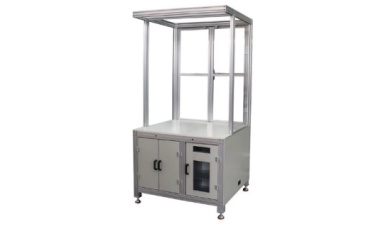
Aluminium extrusions allow for modular assembly, meaning workbenches can be configured to exact specifications. Adjustable legs, interchangeable panels, integrated tool rails, and ergonomic features can all be added or removed without welding or complex fabrication.
Manufacturers benefit from the ability to reconfigure layouts quickly in response to new production requirements or workflow optimization projects. This modularity also supports lean manufacturing by enabling workstations to evolve continuously toward greater efficiency.
4. Ergonomics and Worker Comfort
Adjustable Heights and Angles
Worker health and comfort have become major priorities in factory design. Aluminium workbenches often come with height-adjustable frames or sit-stand functionality, allowing operators to position their workspace according to task requirements or personal comfort.
This adaptability reduces fatigue, prevents repetitive strain injuries, and improves task precision—especially for assembly, inspection, or soldering work.
Integration with Accessories
Aluminium workbenches can easily accommodate accessories such as lighting systems, power outlets, monitor mounts, and tool racks. This integrated design minimizes unnecessary movement and enhances task efficiency.
For instance, a technician assembling small components can have all tools and power sources within reach, improving workflow while maintaining a clean and clutter-free workspace.
5. Sustainability and Environmental Benefits
The global shift toward sustainability has pushed manufacturers to reconsider the materials they use in production equipment. Aluminium stands out as an eco-friendly material due to its recyclability and long lifespan.
100% Recyclable Material
Aluminium can be recycled indefinitely without losing its structural integrity. Recycling aluminium requires only about 5% of the energy needed to produce new material, significantly reducing carbon emissions.
By choosing aluminium workbenches, factories actively contribute to environmental conservation while reducing their overall operational footprint.
Durability and Lifecycle Advantage
A single aluminium workbench can last decades with minimal wear. Its resistance to corrosion and deformation means fewer replacements and less waste generation. Over time, this translates into lower lifecycle costs and a smaller environmental impact compared to disposable or short-lived alternatives.
6. Applications Across Modern Manufacturing
Aluminium workbenches have become a mainstay in a wide range of industries due to their adaptability and performance. Common applications include:
Electronics and semiconductor manufacturing: Clean, non-corrosive surfaces ideal for sensitive assembly work.
Automotive production: Heavy-duty aluminium frames support tools, jigs, and testing equipment.
Aerospace assembly: Lightweight yet rigid workbenches support precision component fabrication.
Pharmaceutical and medical device manufacturing: Hygienic and easy-to-sanitize surfaces for controlled environments.
Packaging and inspection stations: Modular setups that can be expanded or reconfigured as needed.
In each of these industries, aluminium workbenches deliver the balance of aesthetic appeal, technical performance, and ergonomic design required by modern production environments.
7. Economic and Operational Benefits
Cost-Effective in the Long Run
While aluminium workbenches may have a slightly higher upfront cost compared to traditional steel or wood, their longevity and maintenance savings quickly offset the difference. The lack of corrosion, reduced need for repainting, and long-term structural reliability make them an economically smart investment.
Faster Assembly and Mobility
Because aluminium profiles are modular, they can be assembled quickly using standard connectors. This not only reduces installation time but also allows for easy disassembly and relocation if the factory layout changes.
Compatibility with Automation
In the era of smart manufacturing, aluminium workbenches are often integrated into automated assembly systems, robotics platforms, or conveyor lines. Their precision and stability make them compatible with sensors, actuators, and digital monitoring systems—bridging the gap between traditional craftsmanship and automated production.
Conclusion
The aluminium workbench is more than just a functional tool—it represents the evolution of industrial design philosophy. By combining durability, modularity, ergonomics, and aesthetic value, it supports the goals of efficiency, safety, and sustainability that define the modern factory.
Whether used in an electronics lab, an automotive assembly line, or a precision testing environment, aluminium workbenches deliver long-term reliability while contributing to a visually clean and organized workspace.
For manufacturers seeking high-quality, customizable aluminium workbench systems, Hunan Langle Technology Co., Ltd. is a trusted partner. The company specializes in advanced aluminium profile solutions and modular workstation systems tailored to the needs of industrial and automation sectors. Businesses can contact Hunan Langle to explore how their cutting-edge aluminium workbenches can elevate both the efficiency and aesthetic appeal of any modern production facility.