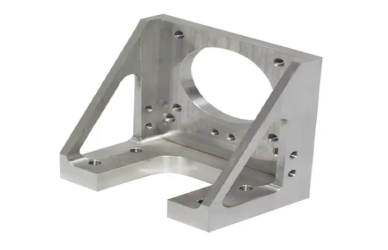
CNC turning is a precision manufacturing process that involves rotating a workpiece against a stationary cutting tool to produce cylindrical or symmetrical parts with high accuracy. It plays a vital role in creating components for industries such as aerospace, automotive, medical devices, and electronics, where tight tolerances and superior finishes are required. The success of CNC turning not only depends on the capabilities of the machine but also on selecting the right material for the part. Choosing the appropriate material is crucial, as it directly impacts the part’s functionality, strength, and overall cost. For instance, materials like aluminum are ideal for lightweight, cost-effective components, while stainless steel or titanium are used for parts requiring strength and durability. Understanding the material properties helps manufacturers achieve the best performance while balancing production costs and part quality.
Common Materials Used for CNC Turning Parts
1.Aluminum
Aluminum is one of the most commonly used materials in CNC turning due to its lightweight nature and ease of machining. It provides a good strength-to-weight ratio, making it ideal for parts used in industries like aerospace, automotive, and consumer electronics. Aluminum is also cost-effective, has excellent corrosion resistance, and is readily available, which makes it an excellent choice for a variety of applications.
2. Stainless Steel
Stainless steel is known for its strength, corrosion resistance, and durability, making it an ideal material for demanding applications, such as in the medical, aerospace, and automotive industries. It is resistant to rust, staining, and other forms of corrosion, which is crucial for parts exposed to harsh environments. Though harder to machine than aluminum, modern CNC turning machines can handle stainless steel effectively when paired with the right tools and cutting parameters.
3. Brass
Brass offers excellent machinability and corrosion resistance, making it a popular choice for parts that need to be easy to machine while still providing a durable finish. Brass is often used in electrical components, plumbing fixtures, and hardware parts due to its good conductivity and resistance to corrosion. It also has a smooth finish, which is often desired in aesthetic applications.
4. Steel Alloys
Steel alloys are selected for their strength, hardness, and machinability. Common alloys such as carbon steel and alloy steel are used in applications that require high strength and resistance to wear. Steel alloys are often used for parts in the automotive, construction, and industrial machinery sectors. They can be harder to machine compared to aluminum but provide superior durability and strength.
5. Plastic (e.g., Nylon, Delrin)
Plastics like Nylon and Delrin are lightweight, corrosion-resistant, and easy to machine, making them suitable for parts that require flexibility and chemical resistance. These materials are often used in applications where metal is not necessary, such as in consumer goods, medical devices, and automotive components that require non-corrosive or non-magnetic properties.
6. Titanium
Titanium is prized for its strength, lightweight nature, and resistance to corrosion. It is commonly used in highly demanding industries like aerospace and medical implants, where high strength-to-weight ratios are essential. However, titanium is more challenging to machine compared to materials like aluminum or brass, due to its hardness and tendency to wear tools quickly. Specialized cutting tools and slower cutting speeds are necessary for efficient machining of titanium.
Factors to Consider When Choosing Materials for CNC Turning Parts
1.Strength and Durability:
When selecting materials for CNC turning parts, it is essential to consider the strength and durability requirements based on the part's intended application. Parts that will experience high loads, stress, or abrasion—such as gears, shafts, and structural components—require materials that offer superior strength and long-lasting durability. For example, steel alloys and titanium are ideal for high-stress applications, while aluminum may be more suitable for lighter-duty parts.
2. Corrosion Resistance:
For parts exposed to harsh environments, such as those in marine, aerospace, or medical applications, corrosion resistance becomes a key factor. Materials like stainless steel and titanium are favored for their ability to resist rust and corrosion over time, ensuring that parts remain functional and durable despite exposure to moisture, chemicals, or extreme temperatures. In contrast, materials like aluminum may require additional coatings or treatments to improve corrosion resistance in such applications.
3. Machinability:
The machinability of a material is critical for reducing production time and cost. Materials like aluminum and brass are easier to machine, allowing for faster processing and fewer tool changes. These materials are soft, meaning they generate less wear on cutting tools, leading to better efficiency and a smoother finish. On the other hand, harder materials like stainless steel and titanium may require specialized tools and longer machining times, which can increase overall costs and production timelines.
4. Cost:
Material cost is always a factor in the decision-making process. While high-performance materials such as titanium and stainless steel offer excellent strength and corrosion resistance, they are generally more expensive than materials like aluminum or brass. The material choice should strike a balance between cost and performance—using a material that meets the part’s functional requirements without exceeding the budget. In high-volume production, materials with lower costs and better machinability, such as aluminum, may be the most cost-effective choice, while for specialized parts, investing in more expensive materials may be necessary.
Material Selection for Specific Applications
1.Aerospace Parts:
Aerospace components require lightweight yet strong materials. Aluminum is widely used for its strength-to-weight ratio, while titanium offers exceptional strength, corrosion resistance, and heat resistance for high-performance parts like engine components and fasteners.
2. Medical Devices:
Medical devices demand biocompatibility, strength, and corrosion resistance. Stainless steel is commonly used due to its durability and resistance to corrosion. Plastics like Delrin and Nylon are used in disposable devices and parts requiring flexibility and ease of sterilization.
3. Automotive Parts:
Automotive parts need strength and durability. Steel alloys like carbon steel and alloy steel are used for critical components like engine blocks and shafts. Aluminum is also used for lightweight parts like wheels and engine blocks, balancing strength and weight reduction.
4.Electronics:
In electronics, materials with good conductivity and machinability are essential. Brass is used for connectors and terminals, while aluminum is chosen for heat sinks and circuit boards due to its electrical conductivity and heat dissipation properties.
FAQ
1.How do I choose the best material for CNC turning parts?
When selecting materials for CNC turning parts, consider key factors such as strength, durability, corrosion resistance, machinability, and cost. The material should be able to withstand the intended use conditions, whether it's exposure to high stress, chemicals, or extreme temperatures. For example, if corrosion resistance is critical, stainless steel or titanium may be ideal, whereas if weight reduction is important, aluminum might be a better choice. Also, ensure the material can be machined efficiently based on available tooling and machining processes.
2. What is the easiest material to machine for CNC turning?
Aluminum is generally considered the easiest material to machine for CNC turning due to its softness, lightweight nature, and excellent machinability. It requires less force to cut and produces a smooth finish with minimal tool wear. This makes aluminum an ideal choice for parts that don’t require high strength but need to be produced quickly and cost-effectively, such as in automotive, aerospace, and consumer electronics applications.
3. Why is stainless steel commonly used in CNC turning?
Stainless steel is commonly used in CNC turning because of its strength, corrosion resistance, and durability, which makes it ideal for parts exposed to harsh environments, such as those used in aerospace, medical devices, and marine industries. Its resistance to rust, high temperatures, and chemicals ensures long-lasting performance. Although it is more challenging to machine than softer materials, its benefits in demanding applications far outweigh the increased machining effort.
4. Can plastics be used for CNC turning?
Yes, plastics like Nylon and Delrin are widely used in CNC turning. These materials are easy to machine, lightweight, and have excellent chemical resistance and low friction properties. Plastics are often chosen for parts that don’t require the high strength of metals but still need good durability and performance, such as electrical components, medical devices, and consumer products. They are also ideal for parts that require flexibility or non-conductive properties.
Conclusion
Choosing the right material for OEM CNC turning parts is a critical decision that directly affects both performance and production efficiency. Materials like aluminum offer excellent machinability and lightweight properties, ideal for a range of applications. Stainless steel and titanium, with their superior strength and corrosion resistance, are perfect for high-performance industries such as aerospace and medical. Brass and plastics provide good machinability and corrosion resistance, often used in electronics and medical devices. Steel alloys are selected for their durability and strength, making them the material of choice for automotive and industrial components. When selecting a material, it’s essential to balance strength, corrosion resistance, machinability, and cost, while aligning the choice with the part’s specific use and performance requirements. This ensures optimal results, cost-effectiveness, and efficient CNC turning processes.