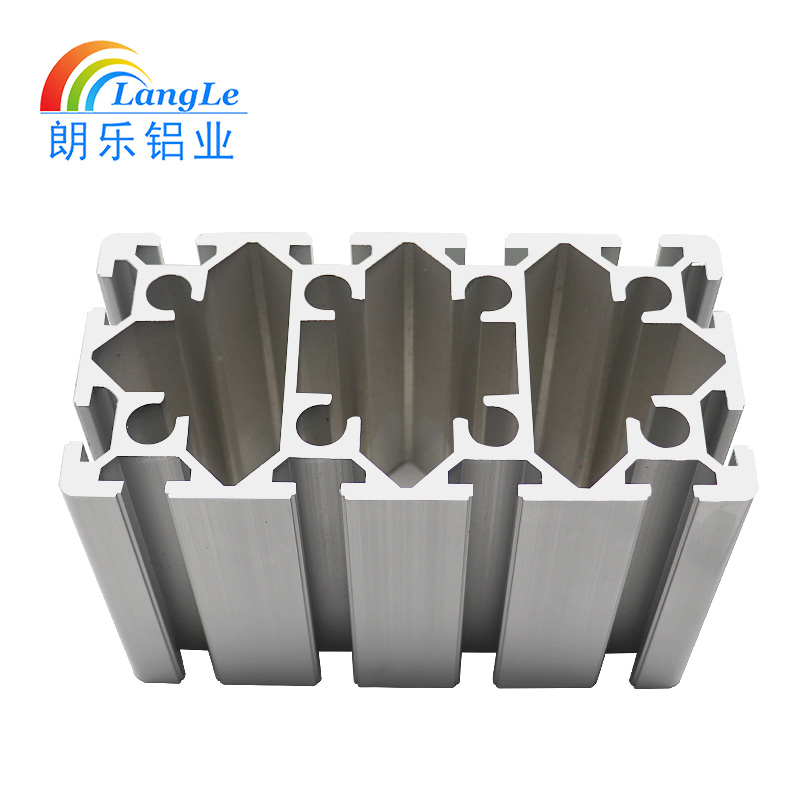
Choosing between a T-slot aluminum profile and a V-slot aluminum profile is a common question in aluminum framing projects. At first glance, the two profile types may look similar because both are modular extrusions used to build frames, structures, and custom assemblies. However, they are designed with different priorities in mind.
For buyers, engineers, and DIY builders, the right choice depends on how the profile will actually be used. Some projects focus on structural framing, where rigidity, modularity, and accessory compatibility matter most. Other projects involve motion-related applications, where profile geometry may play a role in guiding wheels or supporting light linear movement concepts.
That is why selecting between T-slot and V-slot should not be based only on appearance or price. It should be based on the application, the type of assembly, the expected load, and the role the profile plays in the final structure.
In this guide, we will compare T-slot and V-slot profiles from a practical selection perspective and explain when each option is the better choice.
What T-Slot and V-Slot Profiles Are Designed For
A T-slot aluminum profile is primarily designed for modular structural framing. Its slot shape is intended to work with a wide range of fasteners, connectors, brackets, panels, and accessories. This makes T-slot profiles especially suitable for building industrial frames, machine enclosures, workbenches, conveyors, guards, partitions, and many other modular structures.
A V-slot aluminum profile also supports modular construction, but its slot geometry is commonly associated with projects where light movement-related functionality is part of the design. Because the slot form can work with certain wheel-based motion components, V-slot is often seen in builds such as light automation assemblies, motion-guided DIY systems, and compact equipment structures where movement and framing are combined.
In simple terms:
The Main Difference at a Glance
| Feature | T-Slot Aluminum Profile | V-Slot Aluminum Profile |
|---|
| Main design priority | Modular framing and structural assembly | Framing plus light motion-related applications |
| Accessory compatibility | Very broad | Good, but often more application-specific |
| Typical use | Machine frames, benches, enclosures, conveyors, fences | CNC-style builds, light linear motion projects, compact machine structures |
| Framing flexibility | Very high | Good, depending on project type |
| Best for purely structural use | Usually yes | Possible, but not always the first choice |
| Best for wheel-guided DIY/motion concepts | Less specialized | Often preferred |
This table does not mean one profile is better than the other in general. It shows that each one starts from a different design purpose.
Structural Framing vs Motion-Related Applications
The easiest way to choose between T-slot and V-slot is to ask one simple question:
Is the project mainly a frame, or is it a frame that also involves motion-related functions?
If the project is mainly structural, such as:
then T-slot aluminum profile is often the more practical choice. It is widely used for modular framing because it offers strong assembly flexibility and easy integration with common industrial accessories.
If the project includes:
light wheel-guided movement
compact DIY machine structures
CNC-style hobby or light-duty builds
projects where the profile shape is part of the movement concept
then V-slot aluminum profile may be the more suitable option.
This is why T-slot is often seen as the better all-purpose industrial framing solution, while V-slot becomes more attractive when movement-related design features are part of the build.
Assembly Flexibility and Accessory Compatibility
One of the strongest advantages of T-slot systems is their broad compatibility with framing accessories. In most industrial applications, buyers need more than just the profile itself. They also need:
T-slot systems are widely favored because they make this kind of modular assembly easier and more flexible. For projects that may change over time, such as machine upgrades or workstation modifications, this flexibility is especially valuable.
V-slot profiles can also be used in modular builds, but the decision to use V-slot is often tied more closely to the project’s movement-related needs. If the build is primarily a general structural frame, T-slot usually offers a more direct path for common industrial assembly needs.
Load Support and Movement Considerations
Another important difference is how buyers think about load support versus movement function.
A structural frame must be able to support weight, resist deflection, and remain stable during use. In these cases, profile size, span, and connection quality matter more than the slot shape alone. That means both T-slot and V-slot can be structurally useful if the size and design are appropriate.
However, if the project includes movement-related elements, the choice may change. Some V-slot systems are chosen because the profile geometry works naturally with wheel-based components in light motion assemblies. That makes V-slot attractive in projects where the profile is expected to do more than simply hold structure together.
So the comparison is not:
T-slot = strong
V-slot = weak
A better way to think about it is:
Typical Selection by Project Type
| Project Type | Usually Better Choice | Why |
|---|
| Machine frame | T-slot | Strong modular framing and easier accessory integration |
| Machine enclosure | T-slot | Better for panels, doors, brackets, and flexible assembly |
| Workbench | T-slot | More practical for industrial structural builds |
| Conveyor frame | T-slot | Better suited to framing, support, and add-on accessories |
| CNC-style light-duty build | V-slot | Often chosen where profile geometry supports wheel-based movement |
| DIY motion or compact automation build | V-slot | Useful when framing and guided movement are combined |
| Safety fence or partition | T-slot | Usually the more natural framing choice |
This kind of comparison is much more useful than trying to choose based on profile appearance alone.
Which Profile Is Better for Machine Frames?
For machine frames, T-slot is usually the better choice. Machine frames often require:
In most industrial machine projects, the frame is expected to support equipment, guards, wiring, sensors, or mounted accessories. T-slot profiles fit this need very well because they are designed for modular assembly and broad accessory support.
A V-slot profile may still be used in some machine-related builds, especially smaller or more motion-oriented systems, but for general industrial machine frames, T-slot is usually the safer and more flexible choice.
Which Profile Is Better for Enclosures?
For machine enclosures, protective frames, and industrial guarding, T-slot is usually preferred. This is because enclosure projects often need:
panel insertion or mounting
hinges and door accessories
modular connectors
corner reinforcement
easy expansion or adjustment
T-slot framing generally makes these tasks easier and more practical. If the enclosure is purely structural and protective, there is usually less reason to choose V-slot unless the project has another specific design requirement.
Which Profile Is Better for CNC-Style Builds?
This is where V-slot often becomes more relevant.
For CNC-style builds, light-duty motion-guided systems, and DIY machine concepts, V-slot may be preferred because the profile design is often used together with wheel-based movement components. In these projects, the profile is not just a frame member. It may also play a role in how movement is guided.
That said, buyers should still think carefully about the actual demands of the project. Not every CNC-related build should automatically use V-slot. If the structure is larger, heavier, or more industrial, the decision should still consider rigidity, load, span, and overall system design.
Common Mistakes When Choosing Between T-Slot and V-Slot
Choosing by popularity instead of project need
Some buyers use V-slot because they have seen it in DIY machine builds, even when their actual project is a simple structural frame. Others choose T-slot by habit without considering whether motion-related requirements exist.
Ignoring accessory needs
A profile may look suitable, but if the project needs many connectors, panel mounts, or industrial accessories, the framing system should support those needs efficiently.
Focusing only on profile shape
Slot form is important, but profile size, span, load, and connection quality are equally important in real structural performance.
Treating all CNC or automation projects the same
A small DIY motion build and a large industrial machine frame are very different. The right choice depends on the actual scale and purpose of the project.
Forgetting future modification
If the frame may need later adjustments, expansion, doors, panels, or added equipment, modular assembly flexibility becomes more important.
How Buyers Can Make the Final Decision
The best way to choose between T-slot vs V-slot aluminum profile is to review the project from three angles:
1. What is the main function of the profile?
Is it mainly a structural frame, or is it part of a motion-oriented build?
2. What accessories and assembly methods are required?
Will the project need connectors, panels, brackets, hinges, or enclosure components?
3. What are the load and rigidity requirements?
Will the frame support equipment, resist vibration, or span larger distances?
If the project is mainly structural, modular, and industrial, T-slot is usually the stronger choice.
If the project combines framing with light movement-related functions, V-slot may be the better fit.
In many cases, the final answer is not about which profile is more advanced. It is about which one better matches the real use of the project.
Final Thoughts
When comparing T-slot vs V-slot aluminum profile, buyers should not start with the slot shape alone. They should start with the application.
A T-slot aluminum profile is usually the better option for machine frames, enclosures, workbenches, conveyors, and most modular industrial structures because it offers excellent framing flexibility and broad accessory compatibility.
A V-slot aluminum profile is often the better option for projects that combine framing with light motion-related functions, especially in CNC-style or wheel-guided builds.
Neither option is automatically better in every situation. The best choice comes from understanding whether the project is primarily about structure, movement, or a combination of both. Once that is clear, choosing the right profile becomes much easier.
As a manufacturer focused on industrial aluminum profiles, accessories, and customized processing, Hunan Langle Technology Co., Ltd. supplies a wide range of solutions including T-slot aluminum profiles, V-slot profiles, aluminum profile accessories, machine enclosures, workbenches, conveyors, safety fences, CNC machining parts, timing pulleys, and radiator aluminum profiles. With experience in aluminum profile production, machining, and project support, we are committed to helping customers choose more suitable framing solutions based on real application needs. If you are selecting between T-slot and V-slot aluminum profiles for your project, you are welcome to contact our team for further discussion.
FAQs
What is the main difference between T-slot and V-slot aluminum profile?
The main difference is their design focus. T-slot is generally preferred for modular structural framing, while V-slot is often used in projects that combine framing with light motion-related functions.
Is T-slot stronger than V-slot?
Not in a simple absolute sense. Structural performance depends on profile size, span, load, and connection design. However, T-slot is usually the more common choice for industrial structural framing.
Is V-slot only for CNC builds?
No, but it is often chosen for CNC-style or motion-oriented projects because its geometry can work well with certain wheel-based systems.
Which profile is better for machine enclosures?
In many cases, T-slot is the better choice for machine enclosures because it offers strong modular framing and easier accessory and panel integration.
How do I choose between T-slot and V-slot?
Start by asking whether the project is mainly structural or includes motion-related functions. Then compare accessory needs, load conditions, and future modification requirements.