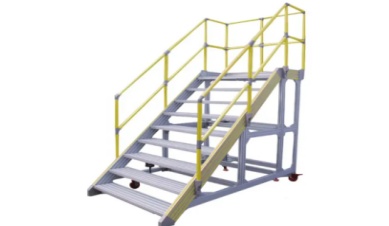
In modern industrial environments, safety, efficiency, and durability are top priorities. Whether in manufacturing plants, warehouses, or maintenance facilities, workers often need to access elevated areas to perform routine inspections, installations, or repairs. In these settings, aluminum platform ladders have become indispensable tools that combine lightweight mobility with robust performance. Their design offers superior stability, safety, and versatility—qualities that make them essential in both light-duty and heavy-duty industrial operations.
1. Understanding Aluminum Platform Ladders
An aluminum platform ladder is a self-supporting, portable access structure that includes a broad standing platform and protective guardrails. Unlike conventional step ladders, which may offer limited stability, platform ladders are specifically designed to provide workers with a secure and comfortable working area at height.
The defining feature of a platform ladder is its large, flat top platform, which allows users to stand safely and perform tasks with both hands free. The platform is usually combined with a set of side rails, locking spreaders, and anti-slip treads, ensuring that the ladder remains stable during use.
Aluminum, as a material, enhances these ladders by offering an exceptional balance of strength, lightness, and corrosion resistance—a combination that makes them ideal for demanding industrial environments.
2. Advantages of Aluminum in Industrial Ladder Design
Choosing aluminum for platform ladders provides multiple mechanical, operational, and environmental advantages that other materials such as steel or fiberglass cannot fully replicate. Its combination of strength, lightness, and resistance to corrosion makes it one of the most practical materials for demanding industrial environments.
Lightweight Yet Strong
One of the most significant advantages of aluminum is its exceptional strength-to-weight ratio. Aluminum platform ladders are substantially lighter than steel alternatives, allowing workers to carry, reposition, and deploy them easily without mechanical assistance. Despite their lightness, they maintain impressive load-bearing capacity, often supporting weights exceeding 150–300 kilograms, depending on design specifications.
In fast-paced industrial settings, where mobility and speed are crucial, this lightweight nature directly translates to greater productivity and reduced fatigue. Workers can move the ladder from one workstation to another quickly, cutting down setup time and minimizing workflow interruptions. Unlike heavier materials, aluminum’s low density ensures effortless handling, even in multi-level facilities or confined spaces.
Corrosion and Weather Resistance
Industrial sites frequently expose ladders to moisture, humidity, and chemical vapors, all of which can accelerate material degradation. Aluminum naturally forms a protective oxide layer when exposed to air, which acts as a shield against corrosion and rust. This inherent resistance means aluminum ladders retain their mechanical strength and appearance for years, even when used outdoors or in damp, coastal, or chemical environments.
Compared with steel ladders that require regular repainting or galvanization, aluminum platform ladders need minimal maintenance. This not only extends their lifespan but also reduces total ownership costs—an essential factor for companies looking to optimize long-term equipment investments.
Non-Magnetic and Electrically Safe (When Designed Properly)
Aluminum’s non-magnetic properties make it ideal for environments where magnetic interference could disrupt sensitive instruments, such as in electronic assembly lines or laboratory testing facilities. Moreover, when aluminum ladders are equipped with non-conductive coatings, insulated rails, or rubberized steps, they can safely be used near low-voltage electrical systems. This feature enhances workplace safety and allows cross-functional use across diverse industrial sectors, from manufacturing to maintenance.
Recyclable and Sustainable
As industries transition toward sustainable manufacturing practices, aluminum stands out as one of the most eco-friendly materials available. It is 100% recyclable and can be reprocessed repeatedly without losing its mechanical integrity or performance. Recycling aluminum requires only about 5% of the energy needed to produce new metal, drastically reducing carbon emissions.
Using aluminum ladders supports compliance with environmental management systems such as ISO 14001, helping businesses meet sustainability targets while reducing their environmental footprint. This makes aluminum not only a practical but also a responsible choice for industrial equipment design—aligning operational efficiency with global sustainability goals.
3. Safety and Ergonomic Features That Define Modern Platform Ladders
Safety is non-negotiable in industrial operations, and aluminum platform ladders are engineered with multiple safety features that reduce the risk of falls and fatigue.
Large, Non-Slip Platform
The platform’s wide surface area provides secure footing for extended work sessions. Most models feature textured or ribbed anti-slip surfaces, ensuring firm grip even when the ladder is exposed to oil, water, or dust.
Guardrails and Handholds
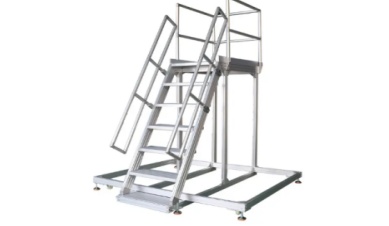
Modern designs include three-sided guardrails that offer full-body protection, preventing accidental slips or falls. In some models, an additional mid-rail or toe board adds extra safety when working at significant heights.
Stable Base and Anti-Skid Feet
To prevent tipping, platform ladders come equipped with broad, reinforced bases and rubberized feet that grip securely to the ground. Some heavy-duty versions use double-braced legs or stabilizing crossbars to distribute weight evenly and minimize wobble.
Ergonomic Design for Comfort and Productivity
Prolonged standing on traditional ladder rungs can cause discomfort and fatigue. The platform design allows workers to shift weight naturally, improving posture and comfort. Some advanced models include cushioned steps or integrated tool trays, which minimize unnecessary movements and enhance workflow efficiency.
Locking Mechanisms and Safety Latches
Automatic locking hinges and spreader braces ensure that the ladder remains secure during operation. These features are particularly important in industrial settings where vibrations or uneven flooring can compromise stability.
4. Key Industrial Applications of Aluminum Platform Ladders
Aluminum platform ladders are used across diverse industries due to their adaptability and ruggedness. Below are some of their most common applications:
Manufacturing and Assembly Lines
Workers often need to access machinery, conveyor belts, or elevated controls. Platform ladders provide a stable work area for precise tasks like assembly, welding, or component installation.
Warehousing and Logistics
In large warehouses, workers frequently need to retrieve goods from high shelves. The lightweight and mobile nature of aluminum platform ladders make them ideal for stock picking and inventory management.
Maintenance and Facility Management
For routine maintenance tasks—such as replacing lights, cleaning ducts, or servicing HVAC systems—aluminum ladders offer the perfect blend of mobility and safety. The platform allows technicians to carry tools conveniently and work comfortably for extended periods.
Aviation and Automotive Sectors
In industries where precision and safety are paramount, such as aircraft inspection or vehicle assembly, platform ladders enable stable and close-range access to complex components without risk of scratching or damage.
Construction and Utility Work
Outdoor and on-site applications demand ladders that can withstand exposure to the elements. Aluminum platform ladders perform exceptionally well in these conditions due to their weather resistance and robust build quality.
5. Comparing Aluminum Platform Ladders to Other Materials
Feature | Aluminum | Steel | Fiberglass |
Weight | Light and easy to move | Heavy and difficult to transport | Moderate |
Corrosion Resistance | Excellent | Poor without coating | Excellent |
Strength | High strength-to-weight ratio | Very strong but heavy | Moderate |
Electrical Conductivity | Conductive (can be coated for safety) | Conductive | Non-conductive |
Maintenance | Minimal | Requires rust prevention | Moderate |
Cost | Cost-effective and durable | Higher due to weight and coating | Typically higher |
From this comparison, it’s clear that aluminum offers the best balance of strength, portability, and cost-efficiency, making it the preferred choice for most industrial operations.
6. Enhancing Efficiency and Productivity
Industrial productivity depends on the ability to work efficiently and safely at height. Aluminum platform ladders directly contribute to this by:
Reducing setup time through lightweight, portable construction.
Increasing comfort, allowing workers to perform tasks longer without fatigue.
Improving workflow, as integrated trays and railings keep tools within reach.
Minimizing downtime, since aluminum requires less maintenance compared to steel ladders prone to rust or deformation.
The long-term benefits include lower operational costs, improved employee safety, and extended equipment lifespan—all crucial for maintaining competitiveness in industrial environments.
7. Selecting the Right Aluminum Platform Ladder
When choosing an aluminum platform ladder, it’s important to consider:
Working Height – Select a model that provides sufficient reach while maintaining safe platform elevation.
Load Capacity – Choose according to your industry’s requirements; heavy-duty models can support up to 150–300 kg.
Mobility Features – Casters or wheels can make transport between work zones faster.
Foldability and Storage – For compact spaces, foldable designs enhance convenience.
Compliance with Safety Standards – Ensure the ladder meets OSHA, EN131, or local industrial safety regulations.
Selecting a reliable manufacturer that prioritizes quality materials and precision engineering ensures your investment yields long-term safety and performance benefits.
8. Conclusion: The Future of Industrial Access Solutions
As industries evolve toward more automated, efficient, and safety-conscious operations, aluminum platform ladders continue to prove their value. They represent the perfect synergy of strength, stability, and sustainability, meeting the demands of modern workplaces without compromising safety or efficiency.
Their corrosion resistance, ease of handling, and ergonomic design make them not just tools but integral components of industrial infrastructure. Whether for manufacturing, maintenance, or construction, aluminum platform ladders offer a future-ready solution for professionals who need dependable, safe access at height.
For industries seeking durable, high-performance aluminum access equipment, consider exploring the solutions offered by Hunan Langle Technology Co., Ltd.. The company specializes in precision-engineered aluminum products designed for industrial applications, providing customizable ladder and platform systems that meet global safety and performance standards.
By choosing trusted suppliers like Hunan Langle Technology Co., Ltd., businesses can ensure that their worksites remain safe, efficient, and future-focused—reflecting the very best in modern industrial design.